When Nature Still Spoke: Laurens van der Post and the Lost Art of Seeing
Rather, he refuses the enormous philosophical leap from animals kill to nature is fundamentally a ruthless struggle for existence.

– 8 min read
Rather, he refuses the enormous philosophical leap from animals kill to nature is fundamentally a ruthless struggle for existence.
There are documentaries from another time that seem old because of their technology, their pacing, their colours or their language. And then there are documentaries that seem to come from another time because the human being behind the camera still knew how to see differently.
All Africa Within Us, Laurens van der Post's remarkable 1974 film for the BBC, belongs to the latter category.
Van der Post was no marginal figure. The South African writer, explorer, conservationist and friend of C. G. Jung would later become a close friend and spiritual mentor to the then Prince Charles, now King Charles III; he was also chosen as godfather to Prince William. His influence upon Charles's developing concern for nature, spirituality and the relationship between the human being and the living world was considerable. Contemporary accounts described him explicitly as Charles's friend and mentor.
Watching All Africa Within Us today, one begins to understand why.
What van der Post is doing is not merely telling charming African myths, nor simply advocating conservation. He is demonstrating an entirely different mode of knowing nature. The animal is not first reduced to an organism whose morphology and behaviour must be explained causally. It is encountered as gesture, character, teacher, image and bearer of meaning.
And remarkably, he states his epistemological position almost at the beginning.
“Far from being brutalized by nature, far from finding nature red in tooth and claw, I realized it was us who projected our own inhumanity upon it.”
That sentence could almost become the fulcrum of his entire worldview.
Van der Post had returned from nine years of war. He describes encountering a kudu bull, who approaches, pauses and scents the air between them. His reaction is not there is an antelope. It is:
“My God, I’ve come home.”
And then something extraordinary happens. The encounter begins to undo the war in him. He watches animals moving “in their beauty, in their delicacy and in their respect for one another,” and says that something of this was thereby restored within himself.
This is much more important than it may initially appear.
He allows the phenomenon to correct the observer.
That is almost the opposite of reductionism.
The conventional observer arrives carrying a theory and asks nature to submit evidence to it. Van der Post arrives wounded by European civilization and discovers that his conception of nature itself may have been contaminated by what human beings have become.
Hence that magnificent reversal:
Perhaps nature isn't “red in tooth and claw.” Perhaps we have looked into nature and seen our own violence reflected back at us.
That does not mean predation does not exist. Van der Post is obviously surrounded by predators. Rather, he refuses the enormous philosophical leap from animals kill to nature is fundamentally a ruthless struggle for existence.
And this connects directly with what can be noticed in the film itself: the quality of his gaze matters.
He does not stand outside Africa explaining Africa.
He enters into relationship with it.
One of the strongest passages follows immediately. Early humanity, he says, was “never alone,” but lived continually under the animal gaze. A feeling of “kinship and belonging” developed. And then:
“It was to the animals in that astonishing variety that man turned as to a mirror in which to discover hidden aspects of himself.”
This is enormous.
Because now the diversity of animal forms is no longer merely a taxonomic problem.
Giraffe. Lion. Mantis. Elephant. Bird. Rhinoceros.
Each becomes an articulated quality of existence.
Human consciousness encounters differentiated qualities distributed throughout nature and, through encountering them, discovers dimensions of itself.
Van der Post even notices something beautiful in the archaeological record: humanity painted animals before painting itself. He interprets African rock art as a record of participation in nature, and says that when man eventually appears prominently as warrior, “the art begins to decline and the animals vanish.”
Whether one would accept every historical generalization literally is almost secondary to the phenomenological insight:
Self-consciousness can arise through the Other.
We discover ourselves because the world is differentiated.
This is where his method becomes almost Goethean.
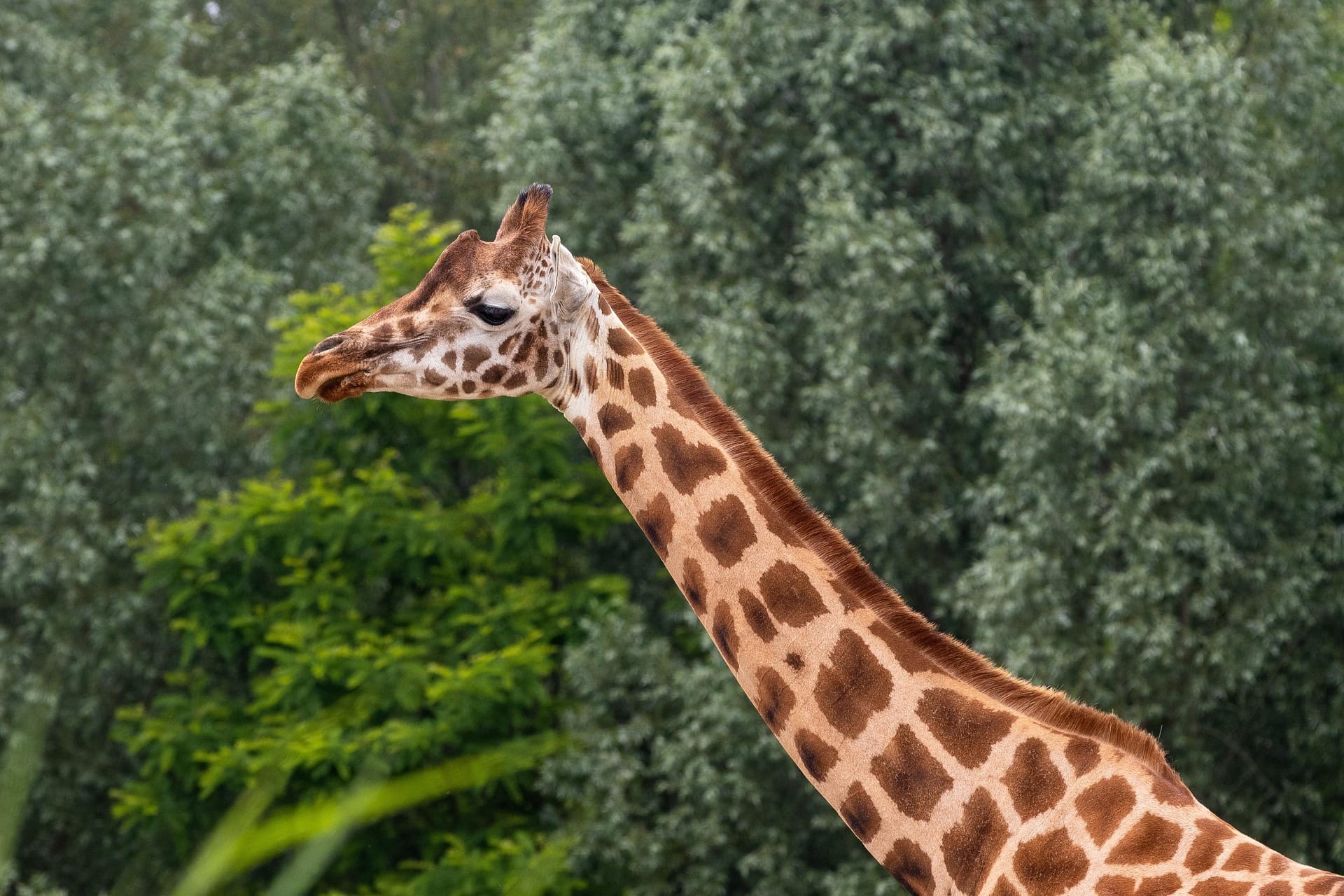
The Bushman story calls the giraffe “world higher than the trees” and gives it a “heart of curiosity,” able to keep watch over everything. The greatest giraffe is eventually placed in the heavens to watch the footsteps of the sun. Van der Post then interprets this:
“Through the giraffe curiosity was converted into a heavenly principle; the spirit of inquiry was put at the service of reason and intelligence.”
Notice what has happened.
Modern explanation asks:
Why did the giraffe evolve a long neck?
The older consciousness asks something closer to:
What does giraffe-ness say?
What gesture has taken bodily form here?
Height. Watchfulness. Distance. Curiosity. Seeing farther.
The myth is therefore not necessarily a primitive attempt at zoological explanation. It can be understood as a reading of the animal's gesture.
That distinction could be central to the article.
We often assume mythology is bad science because we assume mythology was trying to do what science does.
Perhaps it wasn't.
Perhaps it was exercising an altogether different faculty of perception.
This is one of the most beautiful moments in the transcript.
Van der Post is physically lying before this tiny creature and says that the Bushman learned from nature:
“there was nothing so important in nature as the small”
and that only by giving “the utmost reverence” to what appears small and defenseless could one attain spiritually to what is great and significant.
That almost stands out as the essence of van der Post's approach to the world.
Because it completely overturns our contemporary scale of value.
Modern technological civilization is fascinated by power, magnitude, speed, computation, extraction, scale.
Van der Post points toward another scale:
the capacity to perceive significance in what has almost no power at all.
A mantis.
An insect.
Something easily crushed beneath a shoe.
Yet it becomes bearer of one of the greatest mythological imaginations of southern Africa.
This isn't sentimentality. It is an education of attention.
The hyena represents darkness. Van der Post recounts the myth of its conflict with the Morning Star, standing between night and day. But the point is not the annihilation of evil.
He says explicitly that the myth indicates:
“although it is impossible to destroy completely the forces of evil… you can mark evil in such a way that it’s recognizable”
and thereby human beings acquire a choice between good and evil.
That is an astonishingly sophisticated conception.
Consciousness does not eliminate darkness.
It makes darkness discernible.
And once discernible, freedom becomes possible.
That resonates very strongly with a modern, spiritual scientific understanding of the Imagination of Archangel Michael—not the fantasy of simply eradicating the dragon, but acquiring the consciousness by which its proper relationship and domain become recognizable.
Then van der Post reads a whole sequence of animals almost as stages in human development.
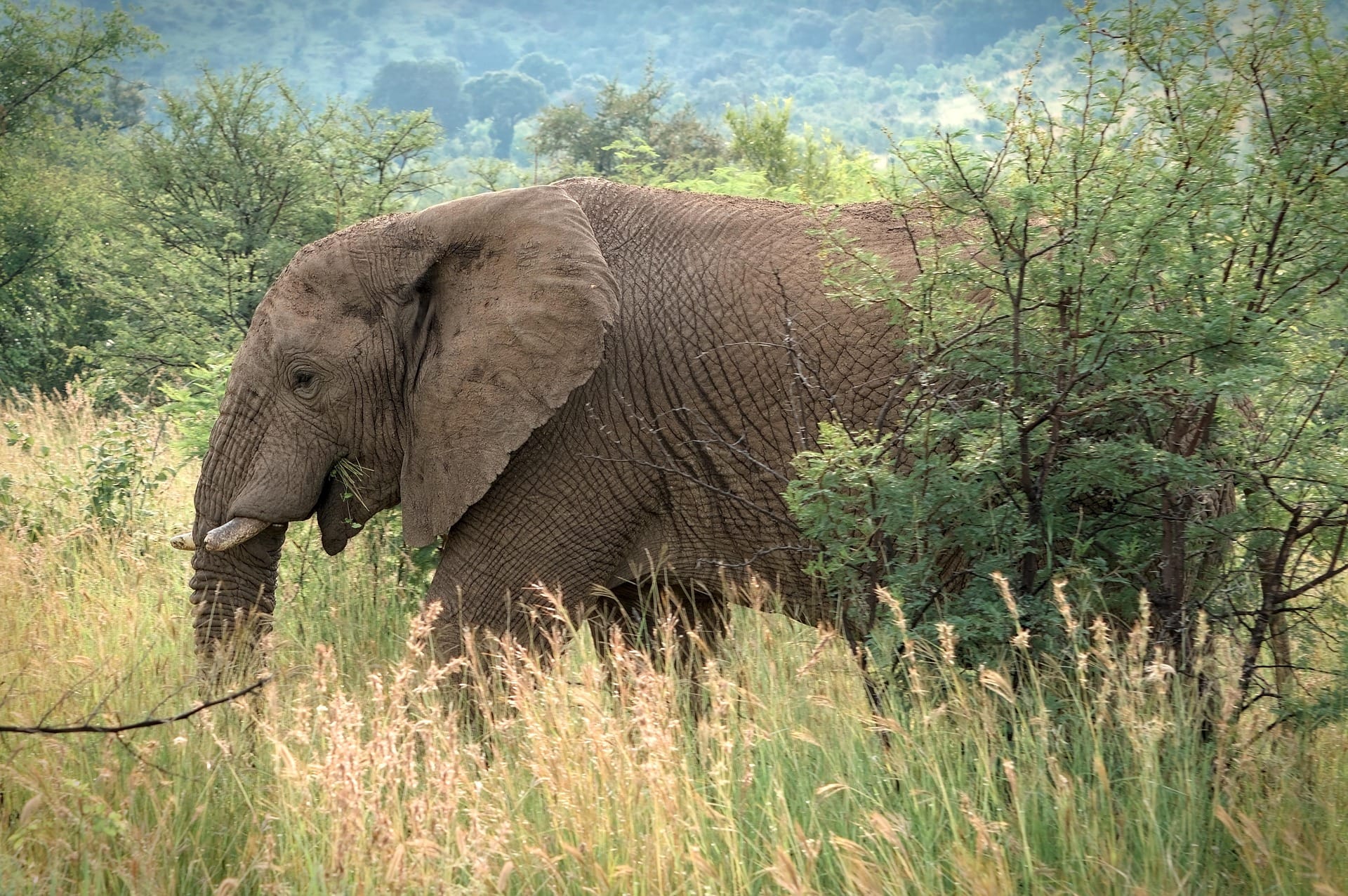
The elephant represents titanic force: power exceeding lawful proportion. Mantis must learn to overcome it through greater consciousness and proportion.
Then comes the baboon. And this passage is uncannily contemporary. The Bushmen recognize reason and intelligence in the baboon, van der Post says, but also:
“a tendency to put the critical analytical faculty to an excessive and unlawful use”
The baboons tear apart every new vision submitted to them.
There is almost an entire re-education of modernity hiding there!
Reason is not rejected.
Critical analysis is not rejected.
It becomes destructive when a legitimate faculty exceeds its proper measure.
That is very close to what is defective about reductionism and even AI: the problem is not necessarily analysis itself, but analysis becoming sovereign—taking a reality apart without possessing the faculty capable of apprehending the whole.
And finally comes the lion.
Power, courage, intelligence, speed and sensory capacity exist together, but—within van der Post's interpretation—without their indiscriminate abuse. The lion becomes an image of individuality within proportion. Mantis has brought humanity fire, proportion and lawful reason; now humanity must learn “to also live individually, not only collectively.”
So these aren't merely animal stories.
Van der Post is reading them as a phenomenology of becoming human.
This may be the dramatic turning point for the video.
Van der Post says that this ancient relationship of meaning between human being, animal and nature was “suddenly and brutally interrupted” by European arrival.
And what particularly horrifies him is the emergence of something previously alien to the relationship he has described:
the human being who kills for the pleasure of killing.
He describes the paradox: Europeans could perceive the beauty and abundance—their own drawings testify to it—yet could not restrain the desire to destroy it.
And then comes his diagnosis:
European man had “lost contact not only with nature in the world without but with his own natural self.”
There a central argument.
The destruction of nature and the alienation of the human being are the same event viewed from opposite sides.
We normally treat environmental destruction externally:
species loss
habitat destruction
pollution
climate
resource extraction.
Van der Post asks about the inner event which makes those outer events possible.
What happened to human perception?
What happened that allowed an elephant to cease being an encounter and become a target?
What happened when an animal ceased being someone through whom the world speaks and became biological inventory?
That is where the footage itself becomes extremely important.
While even the animals seemed different then, still at the time the video was created; they were “not so overcome by the current human gaze.”
We can of course not objectively establish from the film that animals themselves possessed a categorically different character, even slightly different shape, back then. But phenomenologically, actually noticing it opens an extraordinary question:
Does the human gaze participate in the world it perceives?
If generation after generation an animal encounters itself primarily through guns, cameras, vehicles, tracking collars, tourism, habitat pressure and scientific objectification, does the relationship between human and animal change the field in which both exist?
Van der Post certainly behaves as though encounter is reciprocal.
Remember the kudu.
The kudu looks at him.
He looks at the kudu.
And van der Post changes.
That alone destroys the model of detached observation.
There is another passage that stands out.
The Great Spirit gives humanity fire. But when fire arrives, something terrible happens:
“all the people who had been at one with the stars, with the trees and with the animals… were all one, but when the fire came all the animals ran away from the people and the people were left alone.”
That is extraordinary.
Fire is consciousness.
Consciousness makes individuality possible.
But consciousness also creates separation.
Humanity gains something enormous and loses something enormous.
This prevents the film from becoming merely romantic primitivism. The answer cannot simply be “return to nature.” Consciousness has happened. Individuality has happened. Fire cannot be ungiven.
The real question becomes:
Can humanity regain participation with nature without surrendering consciousness?
That may well be where this film suddenly becomes intensely relevant to the twenty-first century.
Because technological civilization represents an extraordinary intensification of that fire.
And AI may represent its newest concentration.
So perhaps the task isn't to extinguish the fire.
It is to carry consciousness through alienation toward conscious participation.
That would be a more appropriate approach.
And van der Post's final movement is magnificent.
He turns toward the Kalahari—the apparently rejected land—and calls it “Cinderella earth.” What appears barren becomes capable, with rain, of astonishing abundance. He explicitly invokes the rejected stone becoming the cornerstone.
Then the rhinoceros—the rejected, misunderstood animal—becomes for him almost mythological. Approaching it without fear, he experiences the closing of a gap:
“not only between him and me but within myself.”
There again is his entire methodology in one sentence.
Healing the relationship with the world heals a division within the human being.
Nature isn't scenery outside us.
Our mode of relationship with it participates in what we ourselves become.
And his final vision is therefore not fundamentally conservationist. It is about wholeness. By “taking back into our love” the rejected rhinoceros, he believes humanity discovers a road toward its own reintegration.
That phrase—taking the rejected back into our love—is absolutely magnificent