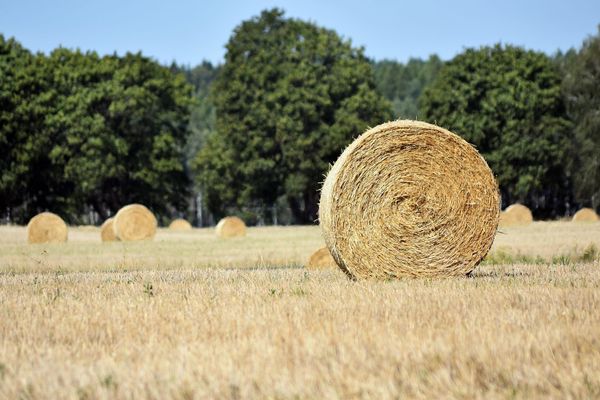
Modern regenerative agriculture functions as a direct, conscious rejection of both synthetic chemistry and biotechnology.
Instead of treating the farm like a sterile factory floor that requires external chemical inputs or genetic software upgrades, regenerative farming treats the land as a complex, self-regulating ecosystem. By utilizing biomimicry—imitating natural ecological patterns—farmers are proving they can achieve high yields, restore soil health, and maintain profitability completely outside the corporate agribusiness grid.
THE BIOMIMICRY TRANSFORMATION
THE INDUSTRIAL MECHANISM
(Chemistry & Biotechnology)
• Synthetic Nitrogen (Haber-Bosch)
• Patented GMO Seeds (Bt/Roundup)
• Monoculture & Tillage
• Chemical Lab Biocides
THE REGENERATIVE SOLUTION
(Biomimicry)
• Legume Symbiosis & Nitrogen Fixers
• Complex Multispecies Cover Crops
• Adaptive Multi-Paddock Grazing
• Soil Microbiome Biostimulants
Industrial farming views soil as a dead medium that merely holds a plant upright while it is artificially fed by petroleum-based inputs. Regenerative agriculture replaces these inputs by kickstarting four fundamental ecosystem drivers: the energy, mineral, biological, and water cycles.
* Replacing Synthetic Nitrogen:
Rather than buying chemical urea, regenerative farmers plant diverse legumes (like field peas, vetch, and clover). These plants form a symbiotic relationship with subterranean Rhizobium bacteria, which naturally pull abundant nitrogen directly out of the air and fix it into the soil.
* Replacing Chemical Biocides:
In place of synthetic fungicides and herbicides that strip the soil microbiome, farmers keep the ground continuously armored under a blanket of living plants. When these plants die back, they form a thick, natural weed-resistant mulch over the earth, effectively shading out weeds without a drop of glyphosate.
* Decentralizing the Agrochemical Market:
Driven by the rising cost and volatility of synthetic inputs, this shift has fueled a massive transition toward "biologicals". The global biological product market is valued at $14 billion and is projected to reach $30 billion, using naturally occurring soil bacteria and biostimulants to encourage existing microbial life to unlock trapped soil nutrients natively.
2. Bypassing Biotechnology: Rewriting the Ecosystem, Not the Code
Biotechnology operates under the reductionist premise that a crop must be genetically engineered to resist drought, ward off bugs, or tolerate harsh environments. Regenerative agriculture achieves these exact same traits by modifying the health of the system rather than the genome of the plant.
* Pest Resistance Without Transgenics:
Instead of using patented Bt crops engineered to produce their own internal pesticides, regenerative farms deploy extreme biodiversity. Planting multi-species cover crops and polycultures breaks the insect lifecycle. A diverse field naturally attracts birds and predatory insects, keeping pest populations biologically balanced without chemical or genetic intervention.
* Drought Tolerance Without CRISPR:
Rather than waiting for labs to engineer drought-resistant traits, farmers focus on building soil organic matter (SOM). For every 1% increase in SOM, an acre of land can naturally retain an additional 20,000 gallons of water. This creates an underground sponge, rendering crops highly resilient to climate extremes entirely through structural soil health.
3. The Core Structural Mechanics of Regeneration
The practical application of this philosophy relies on six core ecological principles designed to systematically reduce mechanical and chemical disturbances: [3]
1. Understand Context: Tailor farming methods strictly to the local climate, soil profile, and indigenous ecosystem.
2. Minimize Disturbance: Drastically reduce or eliminate tillage (plowing) and chemical applications. Tilling tears apart the delicate underground fungal networks (mycorrhizae), causing rapid carbon loss and destroying soil structure.
3. Maximize Soil Armor: Ensure bare soil is never visible. Leaving crop residues or living mulch on the surface protects the earth from erosion, blocks weeds, and regulates ground temperature.
4. Maximize Biodiversity: Actively reject monoculture. Nature never grows a single crop in isolation; fields thrive on complex mixtures of grasses, legumes, and brassicas working in tandem.
5. Maintain Living Roots: Keep living roots in the ground for as many days of the year as possible. Living roots exude carbon compounds and sugars that continuously feed the billions of microorganisms thriving beneath the surface.
6. Integrate Livestock: Bring animals back to the cropland using Adaptive Multi-Paddock (AMP) grazing. By densely packing livestock onto a small section of land for a very short period before moving them, herds mimic the behavior of wild, roaming ruminants. Their hooves massage the soil, their waste acts as a massive dose of organic fertilizer, and the plants are given long periods to recover and sink deep roots.
In Summary: The Financial Realities of Going Clean
This movement is no longer just a fringe, idealistic philosophy. The global regenerative agriculture market has transformed into a massive economic force, valued at $14.5 billion and projected to grow rapidly to $49.1 billion by 2033.
The primary economic driver for this shift is straightforward: farm profitability. Under the industrial model, a farmer's revenue is heavily drained by the soaring costs of proprietary GMO seeds, synthetic fertilizers, and matching chemical sprays. By transitioning to regenerative practices, a farmer may see slightly lower absolute yields in the initial transition years, but their input costs drop toward zero. By erasing their dependency on chemical and biotech monopolies, independent farmers reclaim both their economic sovereignty and their historic connection to a living earth.
Next we will look at the final layers of this civilizational shift, and explore how high-tech precision tools (like AI soil sensors and robotics) are being used by regenerative farmers to measure carbon storage without chemistry.