Wild Berry Prisms
It is more like a fabulous little prism, built by the sun, the growth forces of the plant itself, the water, and the soil around it.

– 1 min read
It is more like a fabulous little prism, built by the sun, the growth forces of the plant itself, the water, and the soil around it.
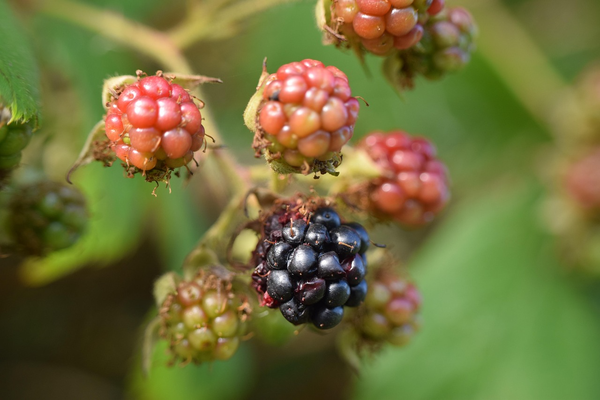
There’s a whole world of tastes in the blackberries that are ripe along the path where we walk in the mornings. They are not perfect like a store-bought blackberry is today. They have missing parts; some are tiny, almost not worth picking. The flavor varies. One can be very tart, even sour, and bitter enough to spit out, while another is as sweet as the lingering warmth of early September.
The perfect berry is not like the ones you buy at the grocery store, where they all look perfect but taste exactly the same. It is more like a fabulous little prism, built by the sun, the growth forces of the plant itself, the water, and the soil around it. It takes perfect positioning—a long season of sunny days, with the right amount of rainy ones, and the ability to grow steadily upward from a tangled patch of goldenrod and creeper vines—to form a blackberry that contains something beyond the others. Like a shower, its different tastes come from every direction.
It is tart like a biting spring breeze, juicy-sweet like the long, soaking days of summer sun, dark like the damp forest soil, and soft like glowing moonlight.
All of these things are in a wild-grown blackberry. I don’t think they can be manufactured quite the same in a greenhouse or even a tended garden. The taste itself carries a wildness—the traces of the struggle for the sun, the sparkling coolness after a storm, the light of the stars on an endlessly clear night. Picking berries on a misty morning is different from grocery shopping. There is something about the air in the wild patch, the humming stillness, the openness to the whims of the world, the displayed ability to overcome. Maybe the wild berries bring a little something of that to our own souls when we eat one.