Inside Starshield: The Stealth Backbone of Modern Space Warfare
Unlike civilian Starlink, which bans offensive combat usage, Starshield is built directly for the rules of engagement across three operational pillars.

– 2 min read
Unlike civilian Starlink, which bans offensive combat usage, Starshield is built directly for the rules of engagement across three operational pillars.
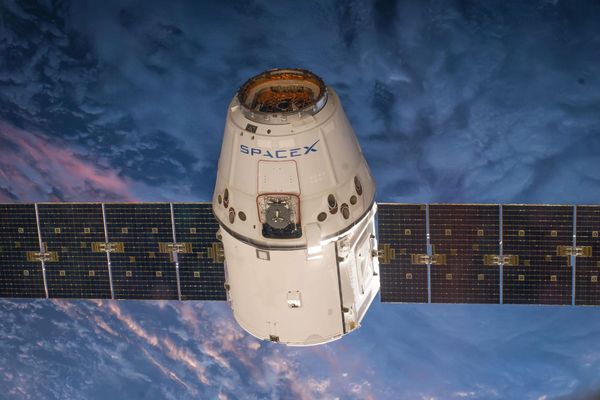
While Starlink transformed global communication for civilian consumers, Starshield is quietly reshaping the future of national security. Operating as a highly classified business unit under the SpaceX umbrella, Starshield adapts commercial satellite innovations into a secure, militarized ecosystem designed specifically for the U.S. Department of Defense (DoD) and international allied intelligence agencies.
Though Elon Musk provides the broad technological blueprint for its deployment, the infrastructure is far too massive for any single individual to control. It is an intricate, multi-billion-dollar framework run by elite aerospace executives and former four-star military commanders, operating in lockstep with the Pentagon.
At its core, Starshield functions as a secure, defense-grade layer built over low-Earth orbit. It achieves global coverage through a dual-network architecture:
These spacecraft utilize inter-satellite laser communications to instantly transfer raw data across a resilient orbital mesh network. Crucially, these space lasers are designed to interface seamlessly with satellites built by legacy defense giants like Northrop Grumman, forging a deeply integrated military-industrial network in the sky.
Unlike civilian Starlink, which bans offensive combat usage, Starshield is built directly for the rules of engagement across three operational pillars:
The system serves as a digital nervous system on modern battlefields. In active combat zones like Ukraine, Starshield infrastructure delivers the high-speed, lag-free bandwidth required to pilot mid-range interceptor drones, feed high-definition video streams, and synchronize complex digital command software like the Delta battlefield management system.
To fund this expansion, the U.S. Space Force and the National Reconnaissance Office (NRO) have awarded SpaceX more than $6 billion in defense contracts. These programs include the $4.16 billion Advanced Moving Target Program for tracking airborne threats, a $2.29 billion Space Data Network Backbone, and a $1.8 billion classified spy satellite network.
To bridge the gap between Silicon Valley and the Pentagon, Starshield is managed by an executive core with top-secret clearances. While SpaceX President Gwynne Shotwell handles the complex government relationships and multi-billion dollar contract negotiations, the operational helm is led by figures like General Terrence O’Shaughnessy, a retired U.S. Air Force four-star general and former commander of NORAD.
Ultimately, while SpaceX provides the mass-production assembly lines—capable of building up to 45 satellites a week—the true authority remains with the state. Under federal defense agreements, once these defense assets are deployed, the U.S. government holds final command over the network, dictating exactly how, where, and when this modern "Star Wars" successor is utilized.