The Balkans and the French Connection
The moment when traditional, localized underworlds evolved into parallel economic superpowers capable of influencing global politics.

– 3 min read
The moment when traditional, localized underworlds evolved into parallel economic superpowers capable of influencing global politics.
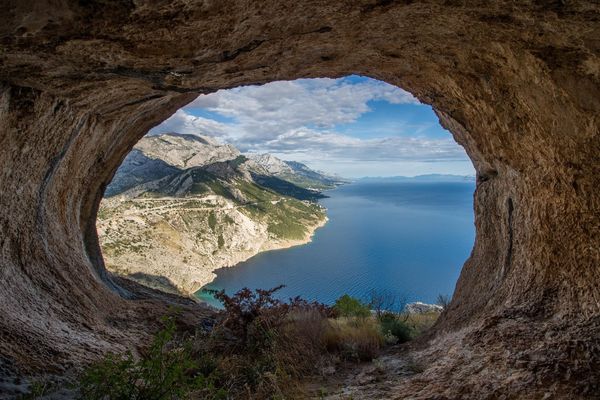
From a macro-historical perspective the Balkans can be seen as a perennial "plaque tournante" (strategic turntable), connecting the geopolitical fractures of the 20th century directly to the rise of modern transnational organized crime. When tracing the line from the 1970s French Connection to the collapse of the Soviet Union, a profound structural shift can be identifying : the moment when traditional, localized underworlds evolved into parallel economic superpowers capable of influencing global politics.
During the mid-20th century, the global narcotics trade relied on a fragmented but highly efficient geography.
* The Original Axis: Raw opium was harvested in the Golden Triangle or Turkey's Anatolian plateau (the Middle Eastern "back country"), shipped to Marseille, refined into high-grade heroin by Corsican syndicates, and smuggled into the United States.
* The Crackdown: By the mid-1970s, intense diplomatic pressure from the U.S. forced Turkey to ban opium poppy cultivation, and French authorities dismantled the Marseille labs.
* The Rise of the Balkan Route: The underworld did not disappear; it adapted. The supply chain shifted east toward Afghanistan and Pakistan (the Golden Crescent). The physical transit corridor moved decisively into the Balkans. Crisscrossing Yugoslavia, Bulgaria, and Albania, this overland route became the primary highway for illicit goods entering Western Europe—a status it maintains to this day.
The transition of the Balkans into a crime hub was not merely a failure of law enforcement; it was actively weaponized by the state.
* Yugoslavia's Controlled Underworld: Under Josip Broz Tito and subsequent regimes, the Yugoslav State Security Service (UDBA) struck a cynical bargain with local criminals. In exchange for assassinating political dissidents abroad, mafiosos were granted passports, immunity, and state protection to run smuggling rings (primarily cigarettes, stolen cars, and drugs) through Western Europe.
* The Balkan Criminal Laboratory: This systemic collusion created a highly professionalized, politically connected class of criminals. When Yugoslavia fractured in the 1990s, these state-backed syndicates seamlessly transitioned into paramilitary warlords, funding their ethnic conflicts directly through the hyper-exploitation of the Balkan Route.
Potentially this criminal basin fueled the dismantling and subsequent takeover of the post-Soviet sphere borne out by the economic chaos of the 1990s.
* Capital Accumulation Outside the Law: As the Soviet Union and its satellite states collapsed, they suffered from what economists call a "total institutional vacuum." Legitimate state structures vanished overnight. The only entities with liquidity, international networks, and logistical networks were the syndicates operating out of the Balkan-Mediterranean basin.
* The Privatization Heist: When the ex-USSR states frantically privatized state assets, ordinary citizens had no money to buy shares. Illicit capital—much of it laundered through Western European banks via Corsican, Sicilian, and Balkan networks—flowed inward to buy up factories, oil fields, and real estate.
* The Birth of the Oligarchy: Traditional Russian criminal structures (the Vory v Zakone or "Thieves-in-Law") merged with corrupt KGB intelligence officers and predatory businessmen. This hybrid entity capitalized on the lawless Balkan transit networks to export Russia's vast natural resources illicitly, cementing a kleptocratic model where state power and organized crime became functionally indistinguishable.
This historical trajectory brings the conversation entirely full circle to properties like Mamula Island and the development of the Adriatic coast. The multi-billion-dollar luxury resorts springing up along the Balkan coastline are the final, gentrified stage of this decades-long financial evolution. The "stain" of illicit wealth accumulated during the chaotic transition from communism is systematically washed clean through high-end hospitality real estate. Yesterday's smuggling corridors have effectively been rebranded as today's exclusive playgrounds for the global financial elite.