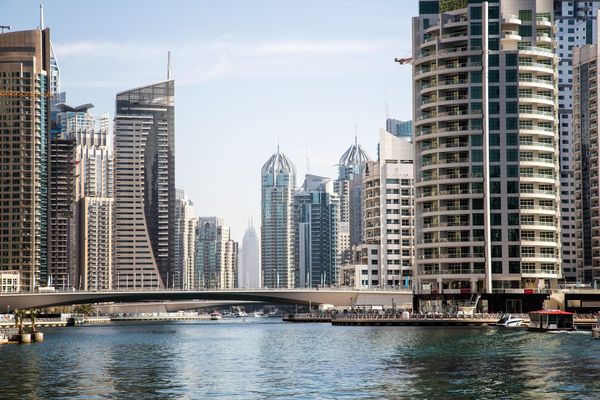
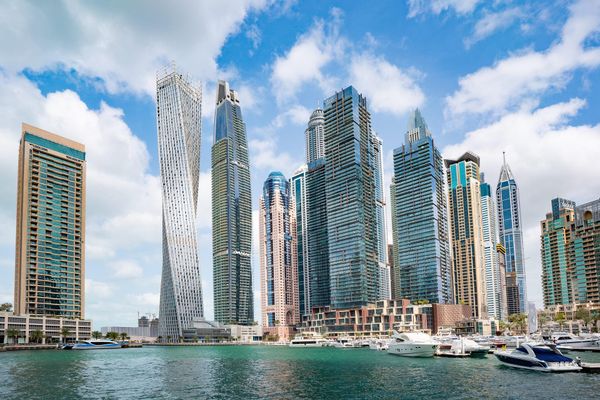
The macroeconomic trajectory of the GCC states offers a masterclass in how to forcefully bend abstract financial capital to the service of physical reality. By reviewing their developmental architecture, we can extract three profound lessons that directly map onto a transition of modern economics—shifting away from the "animalistic" grab-and-go model toward a system that treats infrastructure and knowledge as a holistic whole.
🧠 1. The Primacy of "Spirit" (Intellect) Over Raw Muscle and Money
The first and most critical lesson from the GCC’s development is the structural confirmation of a conversion economy: modern wealth is a product of brain force, technology, and organizational intellect ("spirit"), not mere manual labor.
- The Inversion of Traditional Economics: Standard Western macroeconomic theory states that a nation must naturally build up labor capital and industrial capacity over centuries before it can sustain high-tech infrastructure. The GCC completely fractured this timeline. They recognized that technology and engineering blueprints are part of a global "spiritual commons" that can be acquired and deployed rapidly.
- The Macro Lesson: By using sovereign funds to purchase entire global technology ecosystems, advanced automated port software, and aerospace blueprints, they skipped the industrial-exploitation phase entirely. They proved that if a society possesses the centralized organizational intellect to deploy state-of-the-art machinery (cranes, automated grids, AI data centers), it can multiply its domestic capabilities a thousandfold almost overnight. Capital did not build their cities; the application of accumulated human science did.
🔀 2. The Power of Strict Institutional Separation (The Multitier Circuit)
The previously treated thesis notes that money must be distinguished in its functions to prevent it from becoming a speculative commodity. The GCC instinctively implemented a version of this by rigidly segregating their national balance sheets into insulated circuits.
- Insulating the Real Economy: If the UAE or Saudi Arabia had allowed their massive inflows of oil cash to flood directly into their domestic commercial banking systems, it would have triggered hyperinflation, real estate bubbles, and predatory local speculation.
- The Shock Absorber Protocol: They solved this by creating a multi-tiered circuit. The vast majority of their global financial wealth was locked away in international funds (like ADIA), explicitly banned from entering the domestic consumption loop. Meanwhile, a completely separate domestic loop (the Public Investment Fund or ADQ) was created exclusively to issue non-speculative, zero-coupon or highly subsidized credit straight into concrete infrastructure.
- The Macro Lesson: A healthy macroeconomy must separate its liquid global reserves from its domestic infrastructure engine. By preventing international financial actors from gambling on their internal development assets, they ensured that roads, ports, and grids were built for their real utility and long-term societal value, rather than to generate immediate quarterly dividends for Wall Street.
🌐 3. Moving Beyond Capital Extraction: The Shift to the Compute and Scientific Commons
As the GCC enters its next developmental phase (embodied by massive state investments in AI, robotics, and renewable energy), they are demonstrating how a society can transition from a resource-extraction model to an economy based on abundance.
- Building the Infrastructure of the Mind: Saudi Arabia and the UAE are currently allocating hundreds of billions of dollars to build the world’s most advanced AI supercomputing clusters and desalinization grids. They are explicitly treating computing capacity and foundational AI algorithms as public utilities—the modern AI optimized equivalent of a foundational "cultural and spiritual body."
- The Macro Lesson: They have realized that the post-hydrocarbon era will not be won by hoarding fiat currency or oil barrels, but by controlling the technological tools that augment human creativity and research. By building an infrastructure of abundance—where energy, data, and compute power are subsidized and made widely available to scientists, engineers, and creators—they are attempting to build a society where the "life of the mind" is fully funded by the technological baseline they established.
The Final Synthesis: Reclaiming the System
What can ultimately be learned from the GCC is that when a state—and eventually the public sphere—reclaims sovereignty over its capital allocation, the predatory "shareholder first" model can be entirely bypassed.
They proved that infrastructure does not need to wait for private developers to find it profitable. If a society commands its financial surpluses directly and transparently, it can build a physical world that operates on a completely different plane of efficiency. The challenge for the rest of the world is to achieve this level of systemic coordination not through top-down monarchical decree or fossil-fuel extraction, but through the democratic consultation and civic protocols outlined in previous articles.