Shockingly perhaps, Rudolf Steiner explicitly described past epochs where the Earth's continents functioned dynamically, like living animals.
In his lectures on cosmic evolution and spiritual science (Anthroposophy), Steiner explained that the Earth was not always a rigid, solid rock. Instead, it evolved through highly fluid, plastic, and living stages.
Steiner's descriptions of continents behaving like living organisms center around two major concepts:
1. Continents "Swimming" and Guided by the Stars
In his lectures to the workers at the Goetheanum, Steiner challenged the conventional view that continents sit fixed upon a solid foundation. He stated:
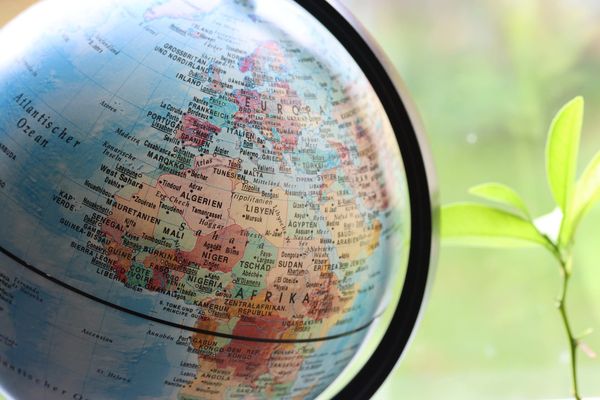
"The continents swim and do not sit upon anything. They are held in position upon the Earth by the constellations. When the constellations change, the continents change, also." [1]
He compared this cosmic dynamic to an animal or an organism responding to external stimuli. Rather than being inert pieces of crust, the landmasses were fluid organs of a larger living entity (the Earth itself), moved and sustained from the cosmic periphery by the forces of the zodiac.
2. The Fluid, Living Earth of the Lemurian Epoch
During the Lemurian epoch (the period preceding Atlantis), Steiner described the Earth's crust as completely different from how we know it today: [1, 2]
- A Sea of Fire and Liquefied Matter: The Earth's crust was not yet fully hardened; it was soft, plastic, and largely semi-fluid. Metals flowed freely, and the ground was a boiling, shifting "sea of fire". [1, 2, 3]
- Continents as Living Organs: The landmasses floated within this fiery, fluid mass like shifting, changing forms. They grew, decayed, and transformed in direct response to the spiritual forces and passions of the entities inhabiting them. [1, 2]
- Parallel Evolution of Bone and Rock: Steiner noted that the formation of solid rocks on Earth happened at the exact same time as the formation of the human skeleton. Before this "hardening," the entire planet functioned like a soft, breathing, metabolic animal body. [1, 2]
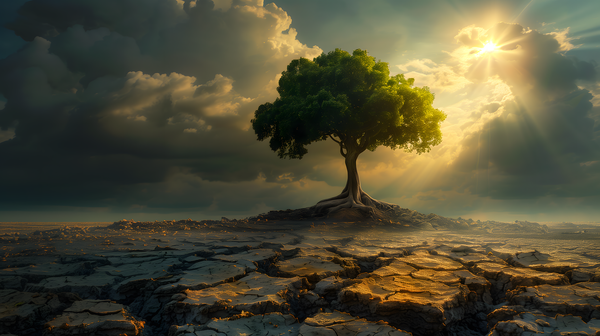
Through this lens, the separation of the continents and their subsequent hardening into rigid landmasses represents the "death" of the Earth's original, fluidic animal life, allowing human and animal kingdoms to step out onto solid ground. [1, 2]
In a next post we will be discussing a further unusual topic, namely the separation of the Moon.