Entering Time
The way footsteps, wagon wheels, bird-calls, and winds have settled into the shape of a valley or the slope of a field...
The way footsteps, wagon wheels, bird-calls, and winds have settled into the shape of a valley or the slope of a field...

What is Historical Fieldwork?
Historical Fieldwork starts with the intention to become attentive to one's environment. This means, that one connects one's attention to a place, or even to a region. Doing such, is not without further effect. While it actually means, that hereby one brings one's consciousness within a region, as if to "spread" one's attention into it, so to speak. This is indeed not indifferent, because the place with which one connects in such a way starts to "respond" to this attention, while the place is hereby "moved" indeed one could say.
As the place, or region, "receives" this attention, it is to say a willingness on the part of one or several people to be attentive to it, it will start to sense that an opportunity comes about, in terms of people "listening" to an area, to reveal something of the area which perhaps needs to be seen, or understood, having somehow still something to say.
This can be an event that took place, and which never came to a proper conclusion, or simply an activity that took place at some point in time, which somehow still has something to say of significance for the current times.
But not just the region itself starts to "respond" to the attention thus given, but one's own attention is hereby slowly enhanced, whereby a kind of awakening occurs, to the reality of a region into which one finds oneself, or of the region to which one directs one's attention.
Of course, this principle where attention is thus said to touch whatever it gives attention to, whereby a mutual relationship occurs between attention, and an object of attention, whatever this may be. It can be a subject matter of any kind, the attention awakens to it, while the subject matters is itself hereby activated, or "awakened".
This principle can also find resonance with the phenomena observed in quantum physics, where attention seems to effect an item under consideration.
About:
Can we step into the currents of time itself — to see what really happened, and what still wants to happen?
In Short:
History is more than facts in a book — it is a living stream. By gazing into a photo, a sculpture, or a historic site, we can enter the atmosphere of its time. This page explores “time travel” through perception: how events, artworks, and landscapes carry layers of destiny, and how meeting them consciously can reveal hidden truths, heal broken moments, and open new futures.
We usually think of time as a line that runs past us: past, present, future. But time is also a medium of being. To enter time is to step into the depth of existence itself — into the reality of events, destinies, and the beings who weave them.
The true time traveller is not the one who flees into fantasy, but the one who dares to step into the real currents of history and destiny. To enter time is to meet being in its most hidden dimension.
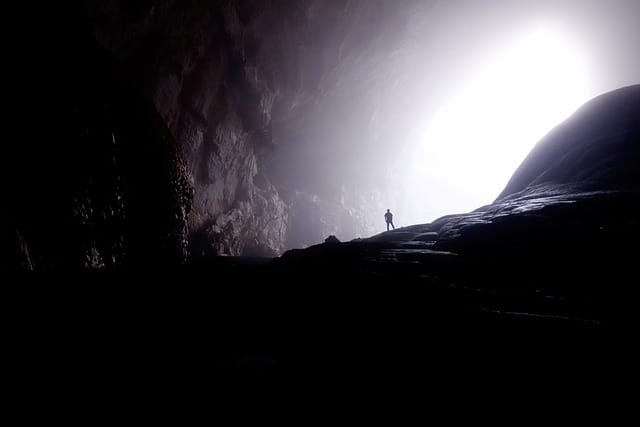
Simple steps to begin “Entering Time”
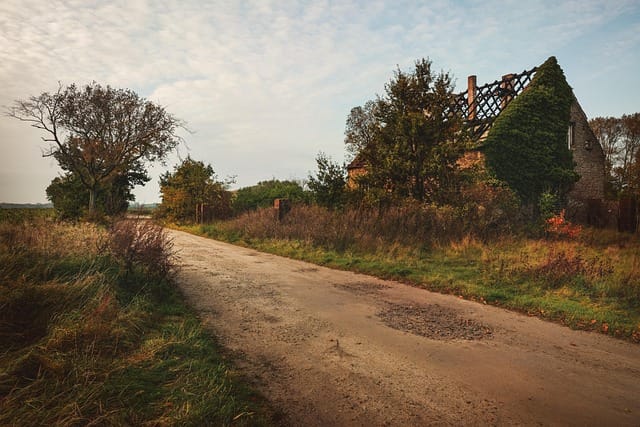
There are roads that seem to move at their own pace.
They are not in a hurry, even if we are. Their bends and curves lean toward the sun, or skirt the shadow of a hill, as though shaped by something that remembers far more than we do.
In such places, the present doesn’t quite stand alone.
It leans — softly, almost imperceptibly — against other times. You can feel it in the way a fence line has sagged just so, or in the way the air seems to keep the scent of a season long past. These are not the remnants of history as we often imagine it, but the persistence of a rhythm: the way footsteps, wagon wheels, bird-calls, and winds have settled into the shape of a valley or the slope of a field.
Sometimes this rhythm is so gentle it can pass unnoticed, even when you are walking right through it. But if you happen to fall into step with it — if your own breath and stride match its tempo — something subtle happens. The moment opens, and you stand in the quiet company of all those who have walked here before.
Perhaps these are the last places where time gathers itself, rather than scattering.
And perhaps to notice them is to be reminded that the thread of life is not something we carry alone.