In The Invisible Competence That Holds the World Together, we looked at something that is easily overlooked in modern economic life: the immense web of human competence, cooperation and responsibility through which ordinary civilization functions.
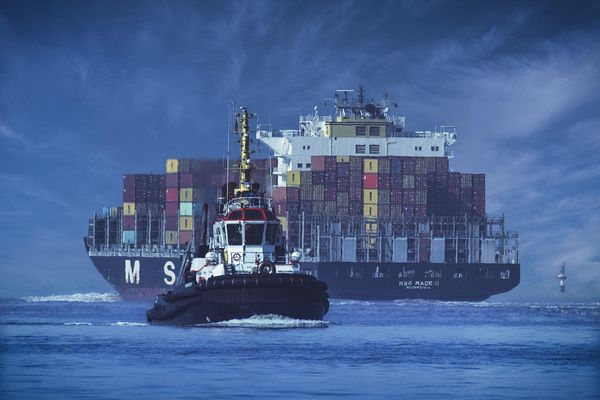
A container ship provided the image.
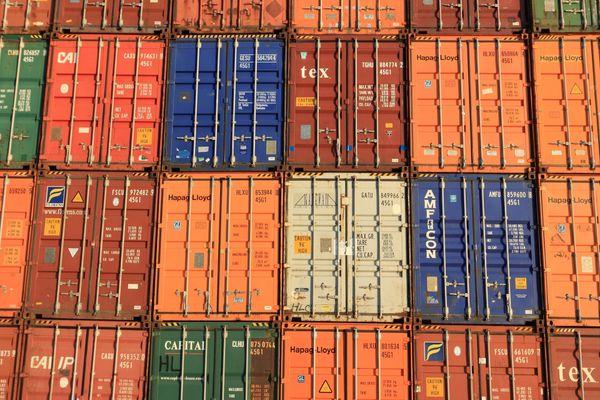
Thousands of containers travel from one side of the planet to another. Behind them stand manufacturers, sailors, engineers, harbour pilots, crane operators, truck drivers, customs officials, warehouse workers and innumerable others. No single person commands the whole process. Most of those involved will never meet one another.
Yet their activities fit together.
Once we begin to see this, another question arises.
What is the economy, actually?
It sounds almost absurd to ask.
We hear about "the economy" every day. The economy grows. The economy contracts. Markets rise. Markets fall. Interest rates change. Governments stimulate the economy. Investors lose confidence in the economy.
But these expressions can gradually produce a peculiar abstraction.
"The economy" begins to appear as an enormous mechanism standing somewhere outside us.
And then we forget that beneath the graphs, currencies, corporations, financial instruments and statistics lies something much simpler and much more human.
Someone needs something.
Someone else is capable of providing it.
Between these two facts, economic life begins.
The Real Economy
There is a useful distinction between the financial economy and the real economy.
The financial economy consists of money, credit, securities, investments and the enormous architecture through which capital moves.
These things have legitimate and necessary functions. A modern container ship could hardly be built without capital. A factory cannot continually manufacture goods if it has no way of financing equipment, materials and wages before those goods have been sold.
But money and finance are not themselves the substance of economic life.
Beneath them is the real economy.
Someone grows wheat.
Someone builds a house.
Someone repairs an engine.
Someone designs a computer.
Someone drives a truck.
Someone teaches a child.
Someone cares for an elderly person.
Someone writes a book.
Someone manufactures a camera.
And somebody else needs what has been produced.
The distinction is important because the financial economy can become so large, powerful and visible that it begins to obscure the activity it originally existed to serve.
Prices fluctuate.
Companies are bought and sold.
Assets appreciate.
Currencies are traded.
Fortunes can be made without anything corresponding directly to a new house, loaf of bread, repaired engine, transported container or taught child.
Yet underneath this enormous superstructure, morning comes and people still have to do things for one another.
The baker still has to bake.
The ship still has to be navigated.
The sick person still has to be cared for.
The broken water pipe still has to be repaired.
This underlying world of capacities, needs and actual work might be called the Real Economy in a deeper sense.
It is the economy underneath the economy.
An Organism Rather Than a Machine
We frequently describe economic life in mechanical language.
Inputs and outputs.
Supply chains.
Human resources.
Production units.
Labour markets.
Efficiency.
Optimization.
These concepts can be useful. But something important disappears when the metaphor becomes reality in our minds.
A machine consists of components whose functions are determined by the mechanism.
Human society is different.
Every participant is simultaneously an individual centre of consciousness.
The engineer aboard a container ship is not a cog.
The engineer can notice.
Judge.
Learn.
Refuse.
Invent.
Become tired.
Take responsibility.
Help another person.
Discover a problem nobody anticipated.
And this occurs throughout the entire economy.
Consequently, society may be better understood not merely as a mechanism but as an organism.
An organism also contains differentiated functions. An eye does something different from a liver. A hand does something different from a lung. Their difference is precisely what makes the whole possible.
But unlike the organs of a biological body, the members of a social organism are free human beings.
This creates a strange and extraordinary form of wholeness.
The whole exists, but no individual contains it.
The world economy is real, yet there is no single centre from which it is operated.
Its intelligence is distributed across millions—indeed billions—of human beings.
The harbour pilot knows the harbour.
The captain knows the ship.
The engineer knows the engine.
The manufacturer knows the product.
The customer knows the need.
And economic life emerges from their relationships.
Sich Hineingliedern
German has a word that expresses something difficult to capture in English:
sich hineingliedern.
A Glied is a member or limb.
Sich hineingliedern therefore means something more than joining or participating. It suggests articulating oneself into a larger whole: finding a place within an organism where one's particular capacities can become active.
This offers a very different image of professional life.
We usually ask young people:
What do you want to become?
What career do you want?
How much can you earn?
What qualifications will you need?
These are legitimate questions.
But another question precedes them:
Where do my capacities meet the needs of the world?
This question has two directions.
I have something to bring.
But I must also perceive what is needed.
Professional life occurs where the two meet.
This means that finding one's place in economic life is neither complete self-expression nor mere submission to an existing system.
It is a relationship.
The world says:
This is needed.
The individual answers:
This is what I can do.
And somewhere between them a vocation may appear.
Crossing the Threshold
There is also a sacrifice involved.
This is easily forgotten when professional life is discussed primarily in terms of income and career.
To enter professional life is to cross a threshold.
At home, we exist largely within the familiar. Our peculiarities are known. Our moods may be accommodated. The environment can bend around us.
Professional life makes different demands.
The ship leaves at a particular time.
The aircraft has to be inspected according to procedure.
The classroom contains children whether the teacher feels inspired that morning or not.
The floor needs cleaning.
The patient needs attention.
The customer is waiting.
The engine does not care about the engineer's mood.
Something objective enters.
To become professionally active therefore requires giving something up.
We relinquish a portion of our private arbitrariness.
We enter forms, responsibilities, schedules and expectations that do not originate in ourselves.
The sailor leaves home for months.
The nurse works through the night.
The janitor performs tasks most people scarcely notice.
The manager accepts responsibility for decisions affecting people beyond the family circle.
Even the writer who becomes responsible to readers discovers that writing can no longer depend entirely upon inspiration.
This is not necessarily oppression.
It can also be development.
A capacity becomes a service by submitting itself to a form.
Professional life asks whether what lives within us can survive the encounter with objective reality.
Can I actually do this?
Can another person depend upon me?
Can I remain myself while fulfilling something that is required by others?
In this sense, professional life can become one of the great formative experiences of adulthood.
We bring ourselves into the world.
And the world, by resisting and requiring something from us, works upon us in return.
From Capacity to Need
This also allows us to look differently at money.
Suppose someone repairs my car.
What has actually happened?
I have a need that I cannot satisfy through my own capacities.
Another human being has developed capacities that I lack.
For an hour or two, those capacities are directed toward my need.
Money makes the exchange possible.
But money is not what happened.
A human capacity moved toward a human need.
The same structure can be found everywhere.
A loaf of bread is the endpoint of capacities directed toward hunger.
A house is capacities directed toward shelter.
Medicine is capacities directed toward illness.
Education is capacities directed toward developing capacities in another human being.
Transport is capacities directed toward overcoming distance.
The more complex civilization becomes, the less visible these relationships become.
We no longer know who grew our food.
We do not know who assembled our telephone.
We will never meet the engineer who designed the braking system in our car.
Yet economically we are intimately connected with all of them.
Our lives are surrounded by the crystallized activity of strangers.
The Banana Peel
This interdependence also has another side.
Every human activity changes the world.
Eat a banana and something remains: the peel.
Build a house and materials have been extracted, transported, cut and transformed.
Grow food and soil is altered.
Heat a building and energy is consumed.
Move 18,000 containers across an ocean and enormous forces are required.
There is no human civilization without consequences.
The French expression on ne peut pas faire d'omelette sans casser des œufs contains an elementary truth: transformation requires something to be transformed.
This does not justify waste or destruction.
But it does challenge an increasingly common assumption that the mere existence of environmental impact proves that an activity is somehow wrong.
The more meaningful question is not whether human activity leaves traces.
It inevitably does.
The questions are:
What do we take?
What do we create?
What remains?
What happens to what remains?
And what do we learn from the consequences?
The banana peel can become waste.
It can also become compost.
The distinction is not whether there is a remainder.
The distinction lies in what happens next.
Seen in this way, environmental responsibility becomes part of economic development itself.
Early industrial societies often transformed nature without understanding the consequences.
Rivers received waste.
Smoke entered the atmosphere.
Materials were extracted as though supplies were unlimited.
Products were created without serious consideration of what would happen at the end of their lives.
But consequences become perceptible.
And once they become perceptible, new capacities are called forth.
Someone develops a cleaner engine.
Someone discovers a new material.
Someone redesigns packaging.
Someone develops methods of restoring soil.
Someone finds a use for what was previously waste.
Someone develops ships requiring less fuel.
Someone asks whether a material can circulate rather than being discarded.
The imperfection itself generates new work.
Human beings do not merely transform the Earth.
We gradually learn to perceive the consequences of our transformations and to transform our own activity accordingly.
Eventually this may lead beyond the idea of merely "reducing our footprint."
Perhaps human activity can increasingly become regenerative.
Not simply taking less from the Earth, but learning how consciously to repair, cultivate and enhance what previous activity has damaged.
That too would be economic activity.
The World at the Periphery
There is an even larger perspective.
For most of human history, economic life remained relatively local.
The shoemaker knew the people wearing the shoes.
The farmer knew the market where the produce was sold.
Production and consumption remained geographically close.
World economy changes this radically.
My need can now call forth activity on the other side of the planet.
I drink tea grown by people I will never meet.
I use a computer assembled thousands of kilometres away.
Someone in Europe drives on a tire manufactured in South Korea and transported aboard a Danish company's ship by Filipino, Indian, South African and other sailors through Chinese, Malaysian, Egyptian and European ports.
The economic horizon has expanded toward the circumference of the Earth.
This can certainly create alienation.
But it contains another possibility as well.
The circle of people upon whom my existence depends has become planetary.
The world is no longer merely somewhere outside my immediate surroundings.
It enters my life continually.
And my own activity can, in principle, enter that world in return.
This creates an unusual relationship between centre and periphery.
Every human being experiences themselves as a centre.
I am here.
The world surrounds me.
But economic life continually connects this individual centre with an ever-expanding human periphery.
The question then becomes not how the individual disappears into "the whole," but how a free individual finds meaningful relationships with that whole.
How do I become a centre that can give something to the periphery?
How do I receive what comes toward me from it?
How do I find my place within a world that is vastly larger than myself without becoming insignificant within it?
Perhaps sich hineingliedern describes precisely this movement.
From Suspicion to Perception
There are good reasons for people to have become suspicious of economic life.
We have seen financial crises, corporate abuses, corruption, exploitation, ecological destruction and extraordinary concentrations of wealth.
Critical consciousness is necessary.
But criticism can itself become a prison.
If we look at economic life only through categories of exploitation, manipulation and power, we gradually lose the ability to perceive the immense amount of genuine human activity occurring underneath them.
The world begins to look like something done to us.
Then withdrawal can seem like freedom.
But perhaps another freedom is possible.
The freedom that comes from seeing sufficiently well to participate consciously.
This does not require naivety.
Trust does not mean believing that every person or institution is good.
Positive engagement does not mean refusing to recognize corruption.
It means refusing to allow corruption to define our picture of the whole.
For beneath everything that can abuse economic life remains the simple fact from which economic life continually arises:
Human beings need one another.
Not abstractly.
Concretely.
I cannot build my own computer, grow all my food, manufacture my medicine, repair every machine, generate my electricity and educate myself in every field.
Civilization begins where the limitations of one person become the possibility for another person's capacities.
Our incompleteness calls one another forth.
Re-Entering the World
This may matter especially for people who have gradually lost their relationship with professional or social life.
Perhaps they have retired.
Perhaps their career failed.
Perhaps illness or circumstance pushed them to the margins.
Perhaps they have become distrustful of institutions.
Perhaps they simply cannot discover where they belong.
The temptation is to experience oneself increasingly as standing outside.
But the Real Economy offers another starting point.
Do not begin with:
Where will the system accept me?
Begin with:
What is needed?
What can I do?
What could I learn to do?
Where could those two realities meet?
Sometimes the answer may be surprisingly modest.
Someone needs something repaired.
Someone needs knowledge you possess.
Someone needs a photograph.
Someone needs companionship.
Someone needs an explanation.
Someone needs something transported.
Someone needs a piece of writing that allows them to see differently.
Economic life begins again at that meeting point.
And perhaps this is one of the most hopeful things about seeing society as an organism.
An organism does not require every member to be enormous.
It requires the member to become real in its function.
A tiny act of genuine service can connect an individual once again with the whole.
From there relationships develop.
Capacities grow.
Other needs become visible.
Unexpected encounters occur.
One begins not merely to make a living, but to enter the world again.
The Economy Beneath the Economy
Perhaps, then, we need two kinds of economic literacy.
We certainly need to understand money, finance, markets, corporations, taxation and political power.
But we also need to learn to perceive what lies underneath them.
The sailor securing a container.
The engineer listening to an engine.
The farmer watching the soil.
The teacher noticing a child.
The cleaner preparing a room for someone they will never meet.
The harbour pilot climbing aboard a ship in the early morning.
The millions of human capacities moving every day toward millions of human needs.
This is not an ideal economy waiting to be invented.
It is already here.
It can be distorted.
It can be exploited.
It can be obscured by financial interests.
It can damage the Earth when consequences remain unseen.
But underneath those distortions, the Real Economy continues.
Perhaps our task is not merely to criticize the structures surrounding it.
It is to learn to see it, to improve it, and ultimately to find our own place within it.
For the economy, at its deepest level, may be something much more beautiful than a system for producing wealth.
It is the continuously evolving form through which human beings become capable of doing things for one another.
And to find one's place within that movement is not merely to become economically active.
It is one way of saying yes to the world.