The Real Economy Beneath the Economy (B)
Economic life is not a machine consisting of fixed components. No single centre commands the world economy; its intelligence is entirely distributed.
– 3 min read
Economic life is not a machine consisting of fixed components. No single centre commands the world economy; its intelligence is entirely distributed.
We hear about "the economy" every day—it grows, contracts, fluctuates, and reacts to interest rates or political policy. These abstractions gradually make the economy appear as an enormous mechanism standing somewhere outside us. We easily forget that beneath graphs, currencies, and financial instruments lies something simple: someone needs something, and someone else is capable of providing it.
There is a fundamental distinction between the financial economy and the real economy. The financial economy consists of money, credit, securities, and investments. While capital is necessary to build a ship or finance a factory before goods are sold, finance is not the substance of economic life. Beneath it lies the real economy:
When financial transactions obscure the real economy, fortunes can be made without anything corresponding directly to a loaf of bread, a repaired vehicle, or a taught child. Yet underneath that superstructure, the real work of mutual provision continues every day.
While we often describe economic life in mechanical terms—supply chains, inputs, outputs, labor markets—human society is not a machine. A machine consists of fixed components. A social organism consists of free individuals, each capable of noticing, judging, learning, taking responsibility, or inventing a solution. The world economy is real, yet no single centre commands it; its intelligence is entirely distributed.
Entering professional life means crossing a threshold where individual capacities meet objective world requirements. At home, the environment bends around us to some extent. Professional life asks for the reverse:
To become professionally active requires relinquishing private arbitrariness to enter objective forms, schedules, and responsibilities. A capacity becomes a service precisely by submitting itself to a form. By meeting resistance and demands from the world, the individual is educated and formed in return.
Money mediates these exchanges, but it is not what actually happens. When a mechanic repairs a vehicle, a human capacity moves toward a human need. Money facilitates the circulation, but the substance is mutual provision.
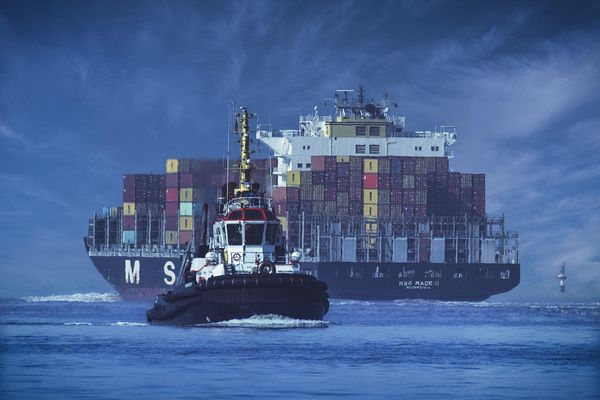
Furthermore, every human activity leaves a trace or residue. Eating a banana leaves a peel; manufacturing goods requires energy and raw materials; shipping cargo across oceans consumes fuel. The meaningful question is not whether human activity leaves traces—it inevitably does—but what we do with those consequences:
Imperfections and unseen consequences call forth new human capacities—cleaner engines, recycled materials, regenerative agriculture, and restoration methods. Environmental responsibility is thus an ongoing developmental process where human beings learn to perceive the effects of their work and transform their activity accordingly.
As the economic horizon expands globally, our daily existence comes to depend on an ever-widening circle of strangers. My need calls forth activity on the other side of the planet; another's need calls forth mine. This connects the individual centre with an expanding periphery of human life.
For anyone who feels estranged from economic or professional life, the Real Economy offers a practical starting point. Rather than asking where a rigid system will accept you, one can ask:
An organism does not require every member to be vast; it requires each member to become real in its function. A modest act of genuine service—sharing knowledge, solving a mechanical problem, providing useful research, or producing clear writing—reconnects the individual with the whole. Beneath all distortions, the economy remains the evolving form through which human beings become capable of doing things for one another. Finding one's place within that movement is a direct way of engaging with the world.