The Invisible Competence That Holds the World Together (B)
No single person understands or controls the whole process, yet the process works. We live within an immense structure of distributed human competence.
– 3 min read
No single person understands or controls the whole process, yet the process works. We live within an immense structure of distributed human competence.
There is a way of looking at the modern economy in which almost everything appears problematic. Globalization becomes exploitation, container shipping becomes pollution, international production becomes cheap labor, and large corporations become concentrations of power. None of these concerns are imaginary. Yet it is possible to become so accustomed to looking for what is wrong that we gradually cease to perceive something else happening right before our eyes: the almost unimaginable amount of human competence, cooperation, and responsibility through which the world is kept functioning every day.
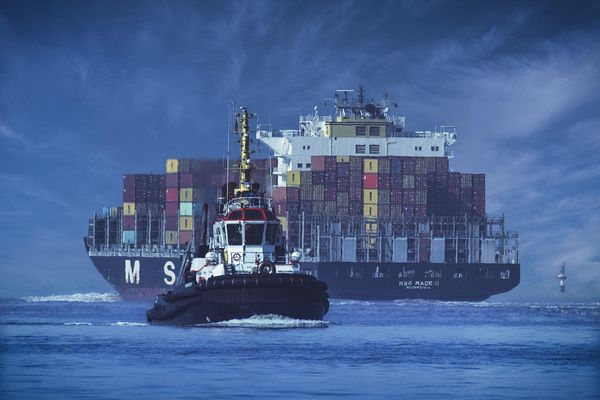
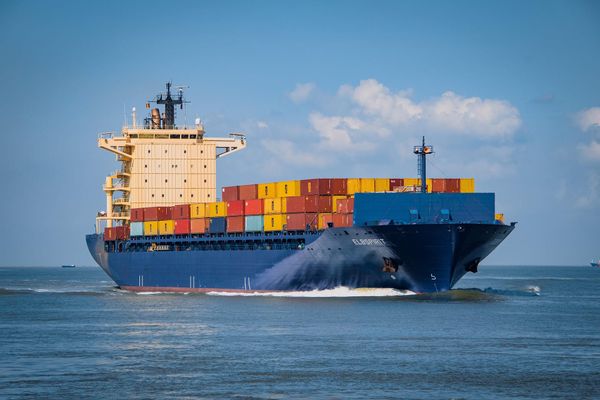
A container ship provides a vivid illustration of this reality. A vessel like the Merete Mærsk measures nearly 400 meters in length and is capable of carrying some 18,000 containers. Yet it is operated by a crew of only 23 people. One sailor, Camille, walks between immense walls of containers, checking whether securing mechanisms remain properly locked, inspecting rat barriers, and painting the deck. Despite long hours and demanding work, what comes through is not misery, but presence and joy. Around her, social life continues—crews eat together, roast a suckling pig for a barbecue, and share laughter. People from entirely different countries and cultures form a small, functioning floating society in the middle of an ocean.
The critical narrative is not false, but it is insufficient. Something appears that cannot be adequately described by categories of labor cost, exploitation, or corporate profit: human beings doing something demanding together, and doing it remarkably well.
When the vessel enters a major harbour like Ningbo, a local harbour pilot comes aboard. The captain knows his ship intimately; the pilot knows the harbour. Neither can replace the other. The captain commands a massive vessel whose behavior he understands through years of experience; the pilot understands the channels, traffic, depths, and local conditions of that specific port. For a brief period, these two distinct forms of knowledge must meet and cooperate.
This small encounter is repeated everywhere throughout the global economy:
No single person understands or controls the whole process, yet the process works. We live within an immense structure of distributed human competence.
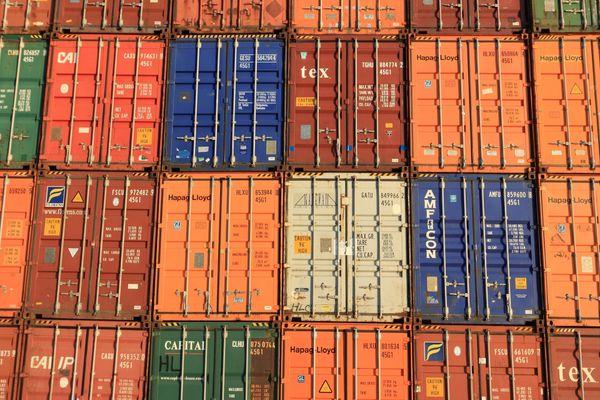
Perhaps nothing expresses this better than the shipping container itself—a simple steel box with agreed-upon dimensions and fittings. Through that single standard, an immense choreography becomes possible across trucks, cranes, ships, warehouses, and railways worldwide. It functions almost as a physical language spoken by the global economy.
Civilization depends upon countless people whom we will never meet doing things correctly that we will never see:
Because nothing dramatic happens when things work correctly, we easily fail to see the competence that prevented a failure.
To acknowledge the beauty of economic life does not require blindness toward environmental costs, precarity, or power imbalances. But criticism should not make us blind to what lies underneath: human beings have needs, and other human beings possess capacities through which those needs can be met. Before money, GDP, or financial markets, there is the farmer growing food, the engineer solving a structural problem, and the sailor moving goods. The real economy consists of human beings doing things for other human beings.
This suggests a shift in perspective for anyone feeling displaced or uncertain of their place in society. Instead of asking from the outside, "How do I get into the system?" a different question becomes possible: "What can I do that another human being needs?"
In German, the expression sich hineingliedern describes finding one's place as an active, functioning member within an organism—not by disappearing into it, but through one's particular capacities. We are centres of capacity surrounded by a periphery of human needs. Taken together, the quiet, daily acts of ordinary competence constitute something immense. Beneath everything that is distorted, another economy has been there all along: an immense circulation of human capacities toward human needs, held together hour after hour by invisible competence.