The "I" in the Human Organism, and the Unleashing of Disturbance
The spiritual members are anchored within physical structures—specifically the lower abdomen, the solar plexus, and nervous systems—and what happens when this anchoring is disrupted,
What, exactly, is the relationship between the “I” and this ganglion system and everything connected with it?
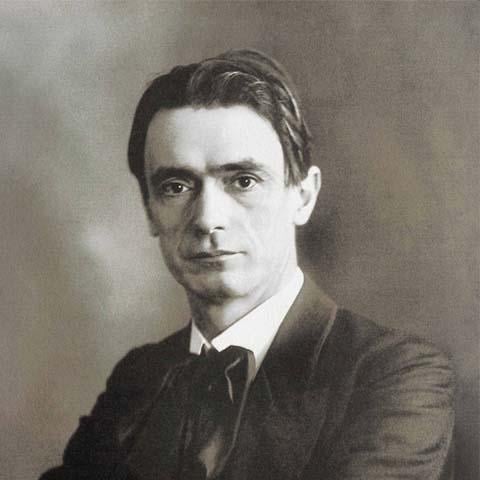
In this lecture (GA 173c, January 14, 1917), Rudolf Steiner explores the complex relationship between the human physical organism and its higher, supersensible components (the “I,” astral body, and etheric body). He examines how these spiritual members are anchored within physical structures—specifically the lower abdomen, the solar plexus, and nervous systems—and what happens when this anchoring is disrupted, leading either to altered states like somnambulism or to forms of mental illness. Here is a summary of the lecture aligned with a broader perspective on what is commonly called mental illness :
1. The Complex Subsurface Nature of the Human Being
Steiner begins by meantioning that ordinary, everyday consciousness only perceives the surface ripples of a deeply complex human soul life. True self-knowledge cannot be achieved through superficial reflection; one must gain insight into the subconscious impulses operating beneath the threshold of awareness. This requires developing an impersonal, clear-eyed view of how the invisible spiritual nature (the “I,” astral, and etheric bodies) interacts with the visible physical body.
2. The Anchoring of the "I" in the Organism
Steiner explains that the human “I”—infected by Luciferic influences through Earth’s evolution—carries inherent tendencies toward egoism, deceit, and self-inflation. In a normal, healthy human being, this “I” is bound, restrained, and held in check by physical structures, specifically the ganglionic nervous system rooted in the solar plexus and the organs of the lower abdomen (which carry older evolutionary influences from Saturn, Sun, and Moon periods). This bodily container prevents the unbridled manifestation of Luciferic impulses.
3. The Phenomenon of Liberation and "Bliss" in Mental Abnormalities
When these anchoring organs become unhealthy, diseased, or altered (as in certain forms of mental illness, somnambulism, or hypnotic states), the higher components or the “I” can become partially or fully freed from their physical constraints.
Because breaking away from the heavy physical anchor and pouring back into the spiritual world produces an intrinsic feeling of release and subjective bliss, the patient's subconscious often clings to this state.
As the excerpt notes, this creates a profound psychological difficulty in healing: while the ordinary waking consciousness may ask to be cured, the subconscious element resists being torn away from the spiritual bliss or relief found within the abnormal state.
4. Spiritual Perception vs. Modern Therapeutic Trends
Steiner’s approach diverges fundamentally from modern modalities that reduce healing to merely bringing "traumas" to the surface to be endlessly relived within the soul.
Instead, Steiner’s path of spiritual practice and true healing is rooted in developing objective spiritual perception (seeing and awakening to reality).
By gaining clear, conscious insight into how thoughts, the "I," and physical organs actually interrelate, the human being moves from being blindly driven by subconscious currents to actually seeing the processes at work.
This conscious "seeing" of ideas and thinking as a living, perceptual activity allows one to consciously interfere, harmonize, and correct imbalances rather than getting trapped in cyclical emotional venting or superficial exploitation of "mental illness."
Here follows an extract of the lecture in question: "Certainly, one can say that the “I” extends throughout the entire body. But its main point of action, where it particularly intervenes in human plasticity and human organization, is the solar plexus—or rather, since all the branches belong to it, the ganglionic system, this nervous process living in the subconscious that takes place within the ganglionic system. Since the ganglionic system helps determine the entire circulation of the blood, this does not contradict the fact that the “I” finds its expression in the blood. In these matters, one must take what has been said quite literally. It is one thing to say that the “I” intervenes through the ganglion system in the formative forces and in the entire life processes of the organism, and quite another to say that the blood, with its circulation, is the expression of the “I” in the human being. Human nature is, after all, complex.
To fully bring home the significance of what is being said here, it is helpful to answer the following question: What, exactly, is the relationship between the “I” and this ganglion system and everything connected with it? How, so to speak, is this “I” anchored in the human abdominal organs? The fact is that when a person lives in a normal, healthy state, this “I” is, as it were, bound within the solar plexus and everything connected with it. It is bound by this solar plexus. What does this mean? This human “I,” which was bestowed upon humanity in the course of Earth’s evolution as a gift from the Spirits of Form, was, as we know, exposed to Luciferic temptation. Just as the human being possesses this “I,” it would actually—since it is infected by Luciferic forces—be the bearer of evil forces. This must be recognized truthfully. It is not by its very nature that the “I” is the bearer of evil forces; but because the “I” is infected with Luciferic forces through the Luciferic temptation, it is in itself the bearer of truly evil forces—forces that, due to the Luciferic infection, are inclined to distort what the “I”’s life of thought signifies into evil. Ever since human beings acquired an “I,” they have been able to think. If there had been no Luciferic temptation, they would think well of all things. But since the Luciferic temptation did occur, the “I” does not think well, but rather, infected by Lucifer, thinks in the way that is characteristic of Earth’s evolution: treacherously, insidiously. It thinks in such a way that it wants to place itself in the light everywhere and everything else in the shadows. It is infected with all manner of selfishness. That is simply how the “I” is, since it is infected by Lucifer. What now lives in human beings as the ganglion system, as the solar plexus, has already come over from the lunar stage of development and, in a sense, represents the “house” for the “I”; the “I” fits into it in a certain way. It can therefore be bound and restrained within it. And so the following fact holds true: Due to its Luciferic infection, the “I” has a constant tendency to behave treacherously and deceitfully, to place itself in the light and everything else in the shadows; but it is restrained by the nervous system of the lower abdomen. There it must be held in check. Through the nervous system of the lower abdomen, the forces that have arisen through the development of Saturn, the Sun, and the Moon—and which are steadily advancing—compel the “I” not to be a demon in the evil sense of the word. Thus, we carry our “I” within us in such a way that it is bound to the organs of the lower abdomen.
Now imagine for a moment that the abdominal organs are in some way unhealthy, that they are not in their normal state. Not being in their normal state means not being willing to fully take in that which spiritually fits within them, that which spiritually belongs to them. The “I” can, in a certain sense, become free in its activity when the abdominal organs are not entirely healthy. Then, if this liberation is brought about by a particular physical overactivity, human nature can express itself in such a way that the “I” is, so to speak, released into the external world, whereas it is otherwise bound. And when the “I” then behaves freely, we have a case in which the human being appears mentally ill by manifesting the characteristics of the Lucifer-infected “I”: then the characteristics of the “I” that I have spoken of come to the fore. One certainly need not become a materialist simply because one fully understands the bondage of the spiritual—that is, here, the “I”—to the physical organs in the life between birth and death—though in a higher sense than the materialist imagines—and even if one also realizes that, so to speak, all hell can break loose and the “I” can be freed from its bonds. Therein lies one case of mental illness."
Seeing Beyond, a research initiative focused on spiritual science, living cognition, and the threshold experiences of modern life.
An initiative grounded in a spiritual-scientific approach to self- and world-observation.
Comments
These darker aspects having infiltrated the "I", as it were, in the course of world-evolution.
Modern relativism says: There is no objective law; therefore, you can be anything, and every extreme is equally valid. This is a descent back into chaos or formlessness.
The Trinitarian Principle replaces a one-dimensional, top-down moral law (a single rigid axis of "Good vs. Evil") with a three-dimensional field of discernment.