Goethe Misunderstood
When compressed into a standard four-step checklist, the process is unintentionally reduced to a mechanical technique, which is the opposite of Goethe's re-enlivenment.

– 2 min read
When compressed into a standard four-step checklist, the process is unintentionally reduced to a mechanical technique, which is the opposite of Goethe's re-enlivenment.
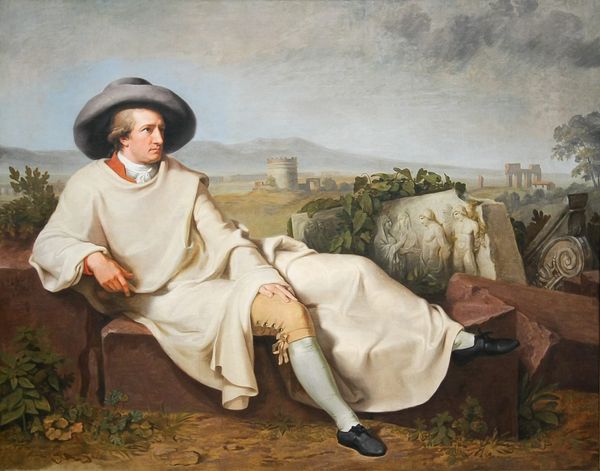
There is a widespread misunderstanding of Goethe’s method.
When compressed into a standard four-step checklist, the process is unintentionally reduced to a mechanical technique: if the observer operates from a modern, reductionist worldview, they will inevitably execute those steps mechanically.
The true challenge is not tracking data points; it is the radical transformation of the observer's inner posture (Haltung) and the active presence of the "I".
To observe in a truly sinnlich (sensible/sensory) way, the observer cannot remain a rigid, static ego recording details from the outside. The "I" must cultivate a disciplined, conscious flexibility, transforming its internal state into a highly receptive, plastic instrument.
This requires a deliberate expansion of awareness:
You explicitly avoid locking your focus onto a single, isolated leaf or tree trunk. Instead, you deliberately widen your vision to perceive the entire layout of the land as a cohesive unit.
The "I" maintains a continuous, dual focus. It is intensely anchored in the natural details of the landscape, while remaining fully aware of how it is directing that attention. This self-monitoring state prevents personal biases, emotional preferences, or intellectual theories from clouding the observation.
By avoiding a rigid, pre-planned checklist, you allow the unique topography to guide your gaze. The landscape actively signals where your attention is needed next, revealing its underlying patterns and structural relationships naturally.
When transitioning this fluid approach from an individual plant to an entire landscape, managing the vast influx of visual data requires a living framework. Rather than applying a mechanical grid, you can observe the dynamic balance between the four classical elemental realms, viewed as active, living processes:
By working with these fields of activity, an organic path of observation naturally unlocks itself:
A dense, unmanaged forest reveals a severe imbalance in the Air/Light realm. The canopy is completely choked, prevent sunlight from reaching the floor, while stagnant air is trapped beneath dense branches. The space lacks structural circulation.
Because the Air/Light realm is completely blocked, the Earth realm responds with high tree mortality, leaving dead, brittle branches lower down the stems. This leaves the Warmth element to accumulate unchecked as dry, volatile fuel, transforming the area into an explosive tinderbox.
Once your observation is conducted out of this fluid inner state (sich hinein zu leben), your practical management plan is never an arbitrary, forced caricature. You don't clear-cut or abandon the land. Instead, you consciously thinning the canopy to invite light back in, clear lower deadwood to allow air to circulate, and restore the natural, breathing balance of the landscape.
Through such an approach, the subsequent stages of imagination, beholding, and intuitive unity naturally emerge as an organic continuation of a living, deeply participatory process.