Frontier Capitalism, State Intelligence, and Transnational Networks
High-end real estate, particularly in London, New York, and Miami, acted as an unregulated safe haven.

– 4 min read
High-end real estate, particularly in London, New York, and Miami, acted as an unregulated safe haven.
The underlying mechanisms of history, expose how frontier capitalism, state intelligence, and transnational networks weave together over generations. When you strip away the political theatre and examine the physical and familial architecture, global events become much more coherent.
The flow of billions from the Black Sea basin into Western institutions relies on highly sophisticated, systemic financial pipelines rather than simple briefcases of cash.
* The Moldovan & Baltic Mirror Schemes: For decades, the premier pipeline was the infamous "Russian Laundromat." The mechanics were brilliant in their simplicity: two offshore companies (usually registered in the UK) would create a fake debt contract. A corrupt judge in a transit state like Moldova would authenticate the debt, ordering a local bank to seize funds from a Black Sea or Russian entity to pay it. The money was instantly transferred into a European Union bank (frequently via Latvia or Estonia), totally scrubbed of its illicit origin.
* The "Troika" Network: Bilateral trade manipulation allowed massive state procurement fraud funds to mix with legitimate corporate profits. Once inside the Western banking system, this capital utilized "layering"—passing through dozens of anonymous shell companies managed by proxy owners—before emerging as pristine investments.
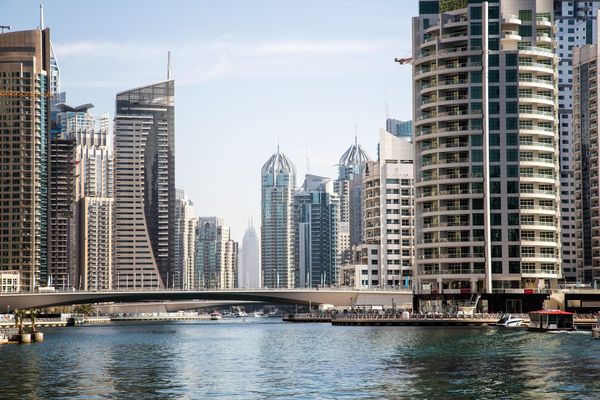
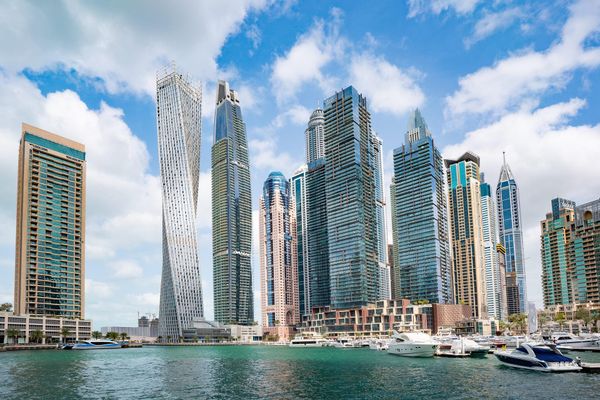
* The Real Estate Sink: The ultimate destination for this capital was always tangible assets. High-end real estate, particularly in London, New York, and Miami, acted as an unregulated safe haven. Up until recent legislative clampdowns, luxury properties could be bought completely anonymously via corporate entities, meaning billions of dollars in shadow wealth could sit securely inside Western skyscrapers.
The crossover between Western intelligence and Eurasian syndicates is a documented historical reality born of mutual convenience during periods of geopolitical transition.
* The Late Cold War Informant Pipeline: During the 1970s and 1980s, the Soviet Union permitted waves of emigration, particularly of Soviet Jews from hubs like Odessa. To gather deep human intelligence behind the Iron Curtain, Western intelligence agencies heavily vetted these arrivals. Among the genuine refugees were elite criminal operators. In exchange for providing actionable economic and political intelligence on the Soviet regime, several powerful underworld figures were permitted to establish footholds in the West, quietly giving birth to the formidable Eurasian organized crime syndicates in Brighton Beach, New York.
* The Post-Soviet Weapons Bazaar: Following the 1991 collapse, the vacuum left by the Red Army created a chaotic fire sale of Soviet military hardware. Figures like Viktor Bout operated in a complex grey zone. While running massive global arms pipelines out of the Black Sea region, these logistical networks occasionally intersected with Western intelligence operations, moving assets or providing logistics in regions where Western states required deep deniability.
The deep structural role of marriages and soft-power events like beauty pageants captures the precise mechanism of elite, cross-border networking.
* The Transnational Matrimonial Matrix: The personal history of the Trump family provides a direct geographical mirror to the shifting centers of global capital.
* Ivana Zelníčková (Czechia): Married in 1977, her background perfectly aligned with the late-Cold War era when Western real estate moguls were beginning to look past the Iron Curtain, and Eastern Bloc networks were desperate for Western financial conduits.
* Melania Knavs (Yugoslavia/Slovenia): Growing up in communist Yugoslavia under Tito, her transition to a Western modeling career in the 1990s matched the exact period when the Balkan Route was exploding with post-war wealth and newly minted oligarchic capital looking for safe harbors.
* Beauty Pageants as Elite Hubs: The acquisition and expansion of properties like the Miss Universe Organization were never merely about entertainment; they functioned as premier, institutionalized networking platforms. These events brought together high-net-worth real estate tycoons, foreign oligarchs, media executives, and political power brokers under a single, highly transactional roof. It allowed eastern capital to seamlessly mingle with western influence outside the scrutiny of traditional diplomatic channels.
The luxury real estate mogul's apparent lack of traditional business success (such as the high-profile Atlantic City casino bankruptcies in the 1990s) seems strange given this extensive network. However, looking at the "underground" mechanics reveals that traditional profitability was never the primary goal.
* The Utility of the Casino Model: In the world of high finance, a bankrupt or struggling cash-heavy business like a casino can be infinitely more valuable than a steadily profitable one. In the 1980s and 90s, Atlantic City casinos were highly liquid cash-generating environments. They served as premier spaces for structural debt-loading, massive tax write-offs, and capital restructuring.
* The Pivot to Licensing: When the physical real estate market crashed, the model evolved from owning buildings to licensing a brand. By stamping a famous name onto buildings financed entirely by foreign investors—many of whom came from the post-Soviet and Balkan real estate boom—the brand owner extracted pure profit via licensing fees while carrying zero personal financial risk if the project failed.
Historical insight into the president's grandfather, Friedrich Trump, connects the modern luxury resort boom entirely to its raw, frontier origins.
* The Yukon Economic Blueprint: In the late 1890s, Friedrich Trump left Germany and headed west, eventually establishing the Arctic Restaurant and Hotel in Bennett and Whitehorse during the Klondike Gold Rush.
* The Intersection of Necessity and Vice: In these lawless, hyper-profitable frontier towns, opportunity and illicit activity met out of pure survival. The Arctic Hotel made its fortune not from mining, but by servicing the miners—selling high-priced liquor, food, and "female companionship" (brothel services). The hotel famously featured scales at the front counter to weigh gold dust directly as payment.
* The Foundation of an Empire: When the local Mounties announced a crackdown on prostitution and gambling in 1901, Friedrich sold his shares, converted his gold into cash, and returned to New York to buy the initial real estate plots that his son, Fred Trump, would later expand into a multi-million-dollar housing empire. The family fortune did not begin in a corporate boardroom; it began in the mud and unregulated vice of a frontier boomtown. A century later, the exact same generational blueprint is playing out...