Inside the base station, information—voice, internet data, signaling—is encoded onto a radio-frequency carrier. Depending on the cellular band, that carrier can be hundreds of MHz or several GHz.
A cellphone tower emits EMF because its antennas are deliberately driven with rapidly alternating electrical currents
A cellphone tower emits EMF because its antennas are deliberately driven with rapidly alternating electrical currents. The key point is that the tower does not simply “radiate electricity.” Electrical energy is converted by the antenna into an electromagnetic wave that propagates outward through space.
A simplified chain is:
data → radio electronics → alternating RF voltage/current → antenna → electromagnetic field → propagating radio wave
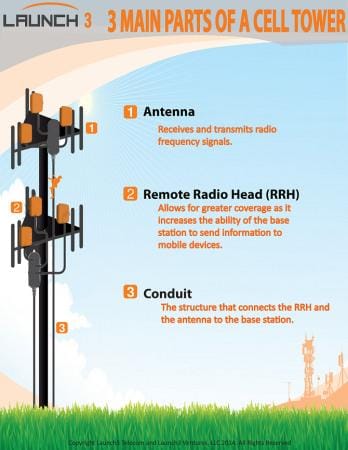
Inside the base station, information—voice, internet data, signaling—is encoded onto a radio-frequency carrier. Depending on the cellular band, that carrier can be hundreds of MHz or several GHz. The transmitter feeds this rapidly changing voltage and current through cables or, in modern installations, directly from a radio unit mounted close to the antenna.
What is especially interesting physically is what happens at the antenna.
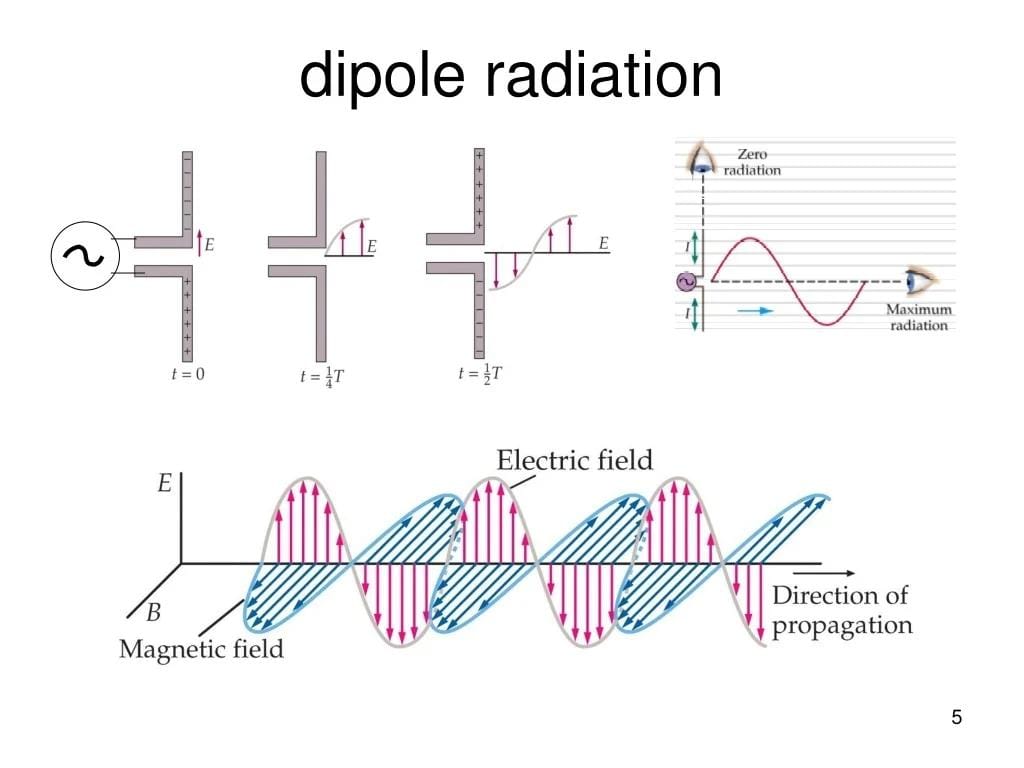
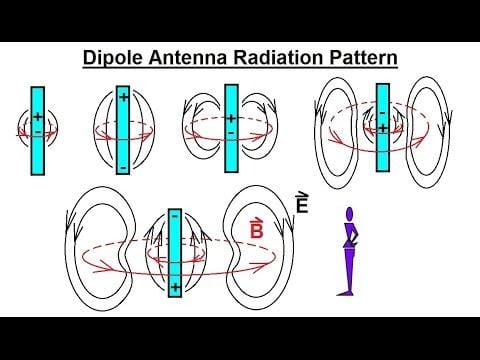
The alternating voltage causes electric charges in the conducting elements of the antenna to oscillate back and forth. That produces a changing electric field (E-field) around the antenna.
A changing electric current simultaneously produces a changing magnetic field (H-field).
And because the electrical and magnetic fields are changing continuously, they become coupled:
oscillating charges → changing electric field changing current → changing magnetic field changing E and H fields → self-propagating electromagnetic wave
Far enough away from the antenna, these become what we normally call radio-frequency electromagnetic radiation.
There is another distinction that matters greatly when discussing cellphone towers. Very close to an antenna is the near field, where the electric and magnetic components can have complicated spatial relationships and interact strongly with the antenna structure. Farther away is the far field, where the E and H fields settle into the familiar propagating electromagnetic wave.
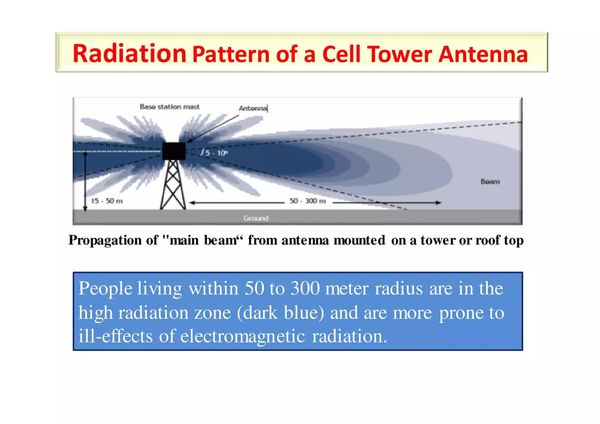
And the tower generally does not radiate equally in every direction.
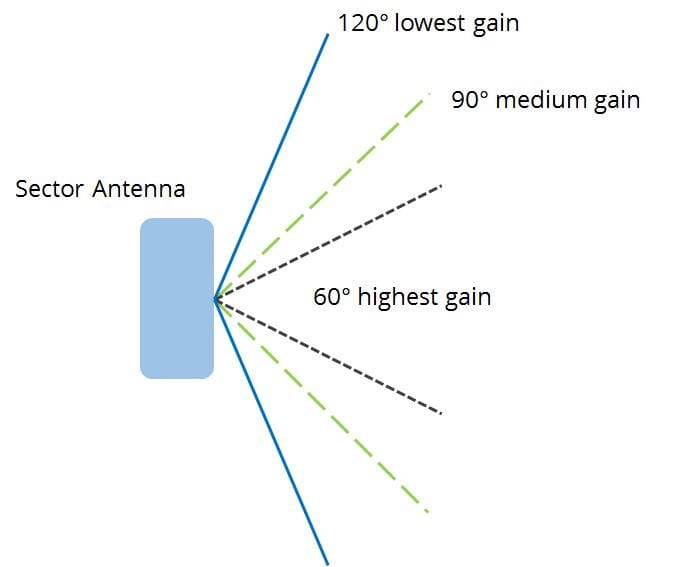
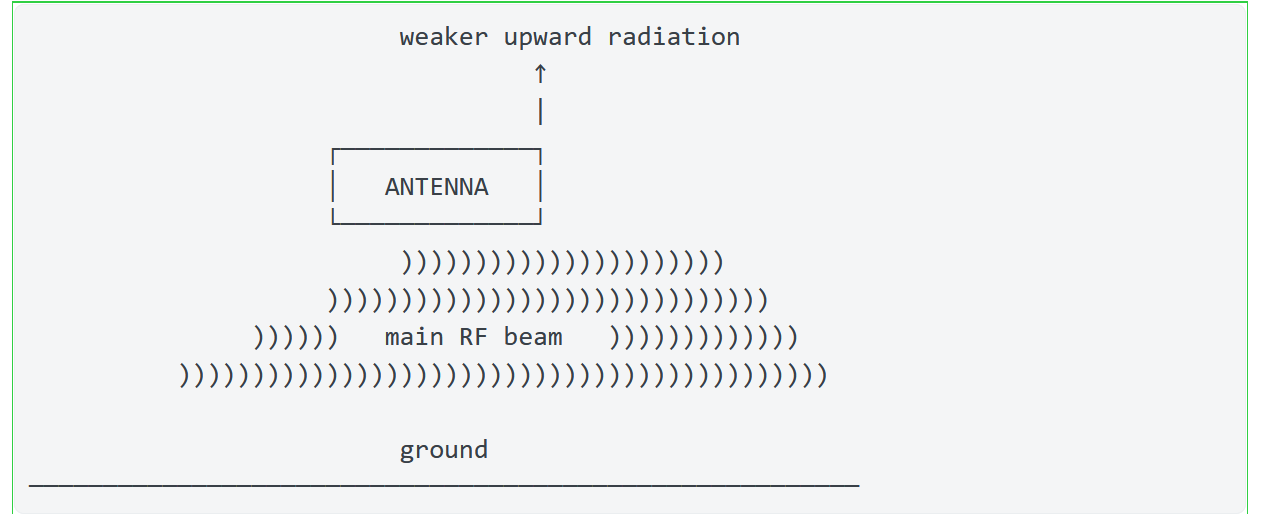
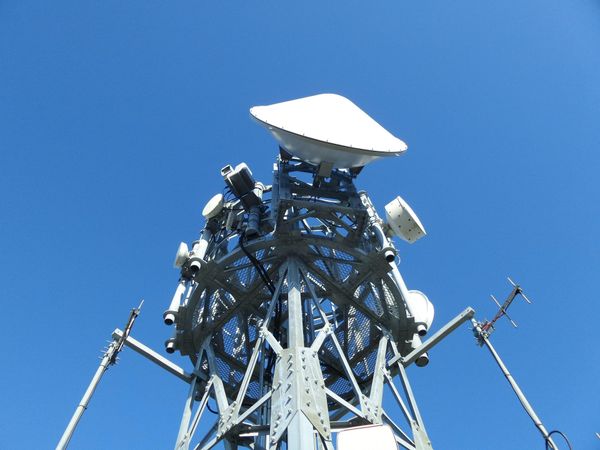
Those tall rectangular panels on towers are usually sector antennas. They concentrate most of their transmitted energy horizontally outward over a particular sector of the surrounding territory, somewhat like a very broad, flattened beam rather than a glowing ball of radiation.
So, schematically:
The beam is normally tilted somewhat downward so that it serves phones on the ground. Multiple panel antennas facing different directions allow one tower to cover different geographical sectors.
One further point is important : “EMF” covers several physically different things. The 60-Hz fields around power wiring, the RF field emitted by a cellular antenna, and the millimeter-wave signals sometimes used by 5G are all electromagnetic fields, but their frequencies, wavelengths, propagation, interaction with objects, and measurement methods differ enormously.
And there is an even more interesting layer to the entire question: where exactly does the EM field cease being something associated with the electrical activity in the antenna and become freely propagating radiation? There isn't actually a sharp boundary. Looking at the near-field → radiating-field → far-field transition would make the physical process much clearer, and it is particularly relevant when people talk loosely about being “exposed to EMF.”
Seeing Beyond, a research initiative focused on spiritual science, living cognition, and the threshold experiences of modern life.
An initiative grounded in a spiritual-scientific approach to self- and world-observation.
Comments
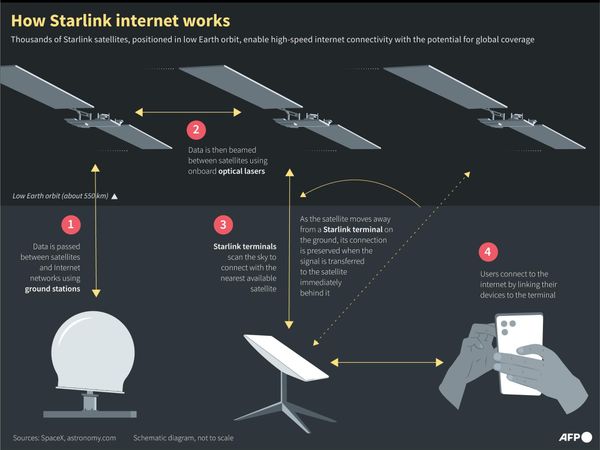
StarLink does change the geography of the question.