Agriculture & Food Production and Global Trade of the Real Utility Model within the World
A view on the numbers: according to the latest Federal Reserve data, the ultra-wealthy top 1% of U.S. households hold a record-shattering $55 trillion to $60 trillion in net worth.
If society legislated a "reasonable comfort ceiling" capping a household's maximum allowed net worth at a highly generous $20 million—which still buys a lifetime of extreme luxury—we can calculate how much "excess hoarded capital" would be freed.
Out of the ~1.3 million households in the top 1%, their average net worth sits around $42 million. Capping them all at $20 million would instantly liberate roughly $25 trillion to $30 trillion from the top 1% alone to fully fund the transition of everyday industries.
Here is how two major sectors would look under that reality.
Part 1: Zooming into Agriculture & Food Production
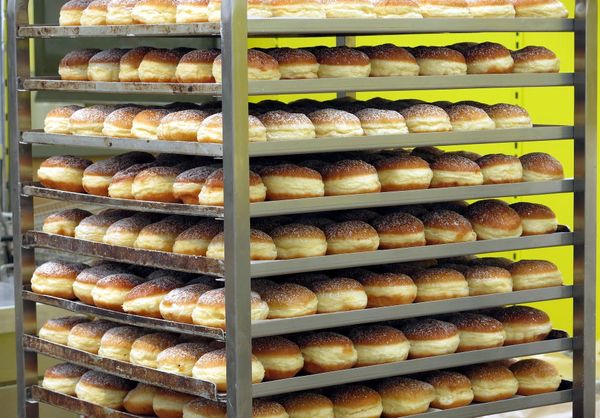
Under the shareholder system, agriculture is dominated by industrial monoculture giants. Food is treated as a financial asset, leading to massive artificial price spikes, exploitative farm labor, and high-fructose chemical additives engineered purely to cut production costs and drive up corporate profit margins. When transitioned to a Real Utility model, the entire daily lifecycle of food shifts completely.
* The Farmer’s Daily Experience: Farmers are no longer locked in cyclical debt to mega-corporations for patented seeds or industrial machinery. Farms are structured as public land trusts managed by agricultural stewards. A farmer’s job is focused entirely on agronomy, soil regeneration, and crop health. Their baseline comfort is fully guaranteed by the state, eliminating the financial terror of a single bad harvest or drought.
* Production Directed by Nutrition, Not Profit: Because success is measured by the Social Utility Index (SUI), a farm's rank rises based on the nutrient density of its food, the reduction of toxic pesticides, and the restoration of local biodiversity. Industrial shortcuts (like spraying carcinogenic shelf-life extenders) are heavily penalized and drop a stewardship team's score.
* The Distribution Network: Food is routed dynamically. Regional networks link local farms directly to town distribution hubs. Because there are no speculative global food markets inflating prices, grocery distribution centers function as open commons. Citizens pick up fresh, high-quality, whole foods at zero out-of-pocket cost.
Part 2: How Global Trade Functions (The Hybrid Dilemma)
What happens if our nation adopts this post-capitalist stewardship framework, but the surrounding world remains fiercely capitalist? To survive without being crushed or economically isolated, the country establishes a structural buffer called a State-Insulated Trading Interface.
--> 1. The Domestic Wall Internally
Hereby the capitalist nations cannot buy up our country's infrastructure. Because private property shares and land ownership have been completely abolished, foreign hedge funds or multinational conglomerates cannot buy up real estate, farms, or factories inside the borders.
--> 2. The Trading Interface
The country cannot completely isolate itself; it still needs to import resources it doesn't physically possess (like lithium, microchips, or tropical fruits). To interact with the capitalist world, the country sets up a state-run trade ministry that acts as a singular, unified economic filter:
* Exporting Surplus Utility: When the country produces a surplus of advanced medicine or highly efficient agricultural machinery, the trade ministry sells it to the global capitalist market for standard international currencies (USD, Euros, Gold).
* The Sovereign Purchasing Fund: The trade ministry pools all external cash received into a single Sovereign Purchasing Fund. It uses this capitalist cash to buy foreign goods that the domestic economy requires.
* Insulating Internal Labor: Foreign goods imported into the country bypass the internal market completely. They are placed directly into the domestic utility infrastructure and distributed based on societal need—completely preventing international price fluctuations or corporate greed from polluting the internal, moneyless system.
By functioning as a collective monolith on the global stage, the country uses the efficiency of its post-capitalist design to out-compete fractured, profit-driven corporate entities abroad, while maintaining a pristine, exploitation-free society at home.
Envisioning this systemic shift could go on for a while, and however accurate or not, it shows that such a shift would structurally be feasible. One major benefit : it would no longer be needed to be shot to Mars in a rocket, for a hypothetical better world, right here, right now, a new World could emerge, one vastly different from what already exists..