Why Angels Withdraw
Where angels remain permanently “present,” human freedom remains permanently postponed.

– 3 min read
Where angels remain permanently “present,” human freedom remains permanently postponed.
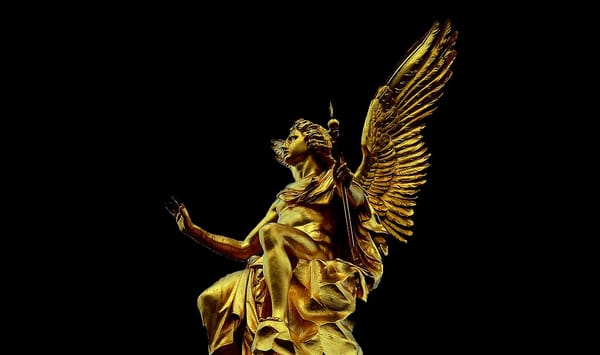
In many contemporary spiritual narratives, angels appear as ever-present guides: inspiring, protecting, revealing, and accompanying the human being on their path. This image is not false — but it is incomplete.
What is often overlooked is a decisive fact of spiritual evolution:
The true goal of angelic activity is not permanent guidance, but withdrawal.
This withdrawal is not abandonment.
It is the condition for human freedom.
Spiritual science recognizes that every human being is accompanied by a guardian Angel (Angeloi). These beings stand immediately above humanity in the cosmic order and have already developed what the human being is now striving toward: Spirit-Self (Manas).
In earlier stages of development — both in humanity as a whole and in individual biography — angelic beings work within the human astral life:
Without this work, the human being could not unfold at all.
But this is not the endpoint.
When angelic support is emphasized without qualification, a subtle inversion occurs.
Initiation begins to appear as:
This corresponds to earlier forms of initiation, appropriate to epochs in which human beings did not yet possess full self-consciousness.
In such times, initiation relied on:
Modern humanity stands in a different position.
After Atlantis, humanity gradually lost instinctive clairvoyance. The spiritual world withdrew. The physical world became opaque, lawful, resistant — as if emerging from mist.
This loss was not a fall, but a necessary sacrifice.
In the space left behind, something unprecedented could arise:
Thinking as an independent inner activity.
Yet thinking is a peculiar faculty.
Just as the eye sees the world but not itself,
thinking thinks everything — except thinking itself.
Everyone thinks.
Almost no one sees their thinking.
The decisive step of modern initiation is therefore not vision, not union, not imagery — but something far quieter:
Taking responsibility for thinking itself.
This means:
This is the birth of thinking as an organ of perception.
Without this step, spiritual experience remains:
Facts accumulate. Experiences multiply.
But nothing arrives anywhere.
Here the role of the Angels becomes clear.
They do not work so that the human being may:
They work so that the human being may one day no longer need them in cognition.
As described by Rudolf Steiner, the greatness of the Angels lies in this renunciation:
Only through this withdrawal can freedom arise.
Spiritual science distinguishes carefully between stages of higher cognition:
Imagination is real — but it is not yet knowledge.
Without disciplined thinking:
This is why thinking must come first, not last.
Modern initiation does not aim at exaltation or fusion.
Its goal is:
Angels assist this process —
by withdrawing at the right moment.
Where angels remain permanently “present,”
human freedom remains permanently postponed.
The task of our time is not to see more,
but to see more responsibly.
Not to multiply experiences,
but to develop the inner organ that can orient them.
Angels do not seek followers.
They seek free human beings.
And freedom begins when thinking —
so long invisible to itself —
is finally taken up as the instrument through which the world, physical and spiritual, can be truly known.