When Nations Do Not Meet:
A different form of global relation would not eliminate conflict. But it would transform its nature.
– 3 min read
A different form of global relation would not eliminate conflict. But it would transform its nature.
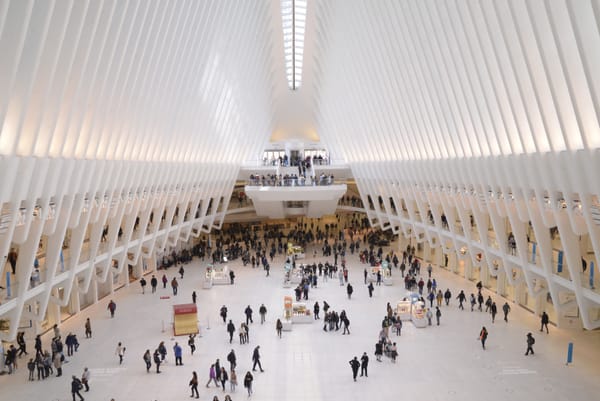
Goods circulate. Capital flows. Data moves instantly across continents.
Nations trade, negotiate, and coordinate at a scale never before achieved.
And yet — something essential is missing.
The world is in contact, but it does not meet.
What appears as relationship is often only exchange.
What appears as cooperation is often only alignment of interests.
What appears as understanding is often only projection.
We have built a global system in which civilizations are economically interwoven,
yet remain inwardly unknown to one another.
This condition — maximum connection, minimum recognition — is not stable.
It is the hidden fault line beneath the present world situation.
Modern globalization operates primarily through transactional logic:
These create a form of contact that is:
But also:
The other is not met as a being, but as:
This produces what may be called:
proxy-relationship — a relation mediated entirely through systems,
without direct recognition of the other’s inner reality.
Thus, nations can be deeply dependent on one another
while remaining fundamentally opaque to one another.
When encounter is absent, perception is replaced by projection.
Each civilization interprets the other through its own internal grammar.
What is seen is not the other,
but a reflection of oneself.
This leads to systematic misreadings:
These are not merely political misunderstandings.
They are perceptual distortions.
They arise because:
we no longer possess a shared capacity to perceive the being of the other.
The current global tension can be understood, in part,
as an encounter between differing civilizational gestures.
These gestures are not moral opposites.
They are qualitatively different orientations toward reality.
Conflict arises when:
You proposed a striking image:
a “tour de table” in which each nation presents its identity openly
Such a gesture would require:
But the current system is not built for this.
It is built on:
Thus, nations do not say:
“This is how we stand in the world.”
They say:
“This is what we want.”
And the difference is decisive.
The modern diplomatic-economic paradigm is often modeled as a form of deal-making.
Its implicit assumptions are:
But this model contains a hidden reduction:
the other is treated as a variable within a negotiation,
not as a being with its own inner necessity.
This leads to:
Because what is not recognized cannot be integrated.
And what cannot be integrated eventually returns as conflict.
Here is the underlying structural contrast:
From: “What can I obtain?”
To: “Who is the other, and how do we stand in relation?”
A different form of global relation would not eliminate conflict.
But it would transform its nature.
It would require:
The capacity to encounter without immediate projection
The ability to express one’s own orientation without reduction
The capacity to position oneself in relation to difference, not against it
The present crisis is not only geopolitical.
It is perceptual.
We have constructed a world in which:
Thus, we meet everywhere —
and nowhere.
Until civilizations learn to recognize one another not only through exchange,
but through being,
the world will remain:
connected, coordinated — and fundamentally unacquainted.