Trusting Reality: Perception, Assurance, and the Human Being as Microcosm
The human being is not an accident. He is a condensed reflection of the cosmos — a microcosm.
– 3 min read
The human being is not an accident. He is a condensed reflection of the cosmos — a microcosm.
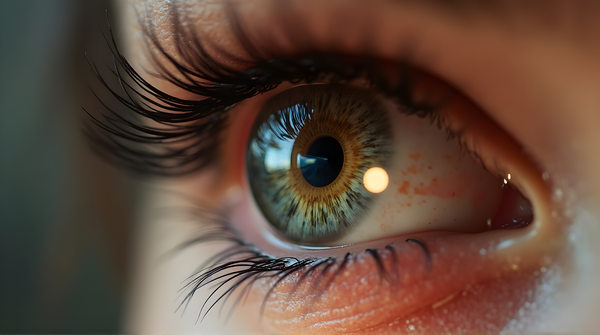
In our time, nearly everything has been put into question — including reality itself.
The world is described as particles, probabilities, simulations, or projections, while lived experience is quietly downgraded to illusion.
Yet behind this radical doubt lies a more specific and rarely examined assumption:
that the human being is an unreliable knower.
Once this assumption is accepted, no certainty is possible.
Not scientific certainty, not spiritual certainty, not even experiential certainty.
Every form of knowing collapses into provisional models or speculative narratives.
But what if this assumption itself is mistaken?
Modern doubt did not arise because the world became unknowable.
It arose because the human being was increasingly described as:
Under such a view, perception must be distrusted,
and reality must be reconstructed through abstractions.
This is why modern thought oscillates between extremes:
These positions contradict one another, yet share a common root:
they remove reality from lived presence.
There is another possibility, long present but largely forgotten.
Perception is not something to be bypassed —
it is something to be educated.
Repeated, methodical, patient observation does not flatten reality;
it reveals its depth.
When the senses are schooled:
This is true in nature, in human encounters, and even in thinking itself.
Distrust of the senses is often mistaken for sophistication.
Yet it may also be a refusal of responsibility —
for if perception can mature, then the human being becomes accountable for how well he perceives.
At the heart of the crisis of assurance lies a distorted self-image.
The human being is often portrayed as a faulty byproduct of blind processes —
a subjective distortion imposed upon an objective world.
But evolution tells a different story when read carefully.
The human being is not an accident.
He is a condensed reflection of the cosmos — a microcosm.
To deny this is to deny the very possibility of knowledge.
Certainly, the human being is unfinished.
But unfinished does not mean defective.
In its archetypal intention, the human being is an advanced and delicate instrument — capable of truth.
Certainty today cannot come from authority, consensus, or accumulation of data.
Nor can it arise from reductionist explanations that replace experience with models.
True assurance emerges differently:
through the experience of lawful correspondence
between a matured human consciousness and a responsive world.
This is not belief.
It is not naïveté.
It is the quiet certainty that arises when:
Such certainty does not eliminate freedom.
It demands it.
Theories that describe reality as mere appearance — whether particle-based or simulated — often arise where confidence in perception has been lost.
They share a hidden premise:
that lived experience cannot be trusted.
But if the human being belongs to the world —
if he is formed from it and within it —
then reality is not something hidden behind appearances.
It is something that reveals itself to those who learn to perceive.
Seeing Beyond does not ask readers to believe in a worldview.
It asks them to reclaim perception as a living, responsible act.
Reality is neither an illusion nor a machine.
It is inhabited, lawful, and responsive.
The human being is not a defective observer of an alien universe,
but a participant in a vast evolutionary process.
To trust reality is not to abandon critical thinking —
it is to deepen it.
And to trust perception is not to regress —
it is to accept the task of becoming worthy of what can be known.