The Threshold of Form and Freedom
The I that can live these virtues becomes the mediator between heaven and earth — capable of perceiving and forming the world anew.
– 2 min read
The I that can live these virtues becomes the mediator between heaven and earth — capable of perceiving and forming the world anew.
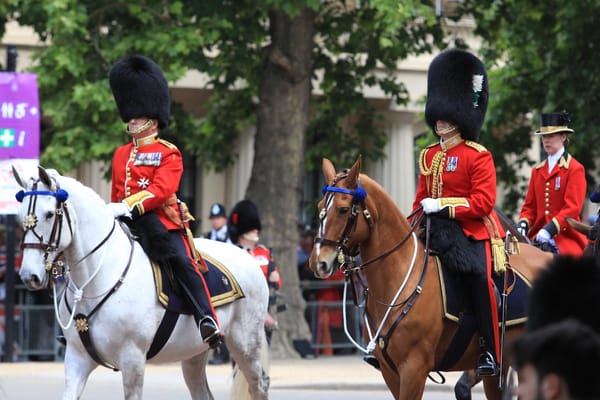
What unfolds publicly in the polarity of Kate and William versus Harry and Meghan is not gossip but initiation in disguise.
It dramatizes how the consciousness soul struggles to stand between two abysses: the loss of authenticity through over-control, and the loss of lawful form through emotional self-display.
Here the task is social: to incarnate individuality in harmony with the whole.
Kate’s bearing, disciplined yet compassionate, represents the forming consciousness of the future human being — the I that acts out of awareness of relationship and timing.
Meghan’s “authenticity,” meanwhile, exposes the shadow side of the same striving: the I that seeks freedom but mistakes exposure for self-knowledge.
Between these, the human soul learns to unite sincerity with structure — to find freedom within form.
Beneath this social drama, an inner counterpart unfolds.
Around the mid-twentieth century, as materialism reached its peak, Steiner foresaw that new perceptive capacities would begin to awaken in ordinary consciousness.
The Christ in the Etheric—the reappearance of the divine within the life forces of the Earth—would gradually become perceptible.
Humanity would begin to sense the formative life of the world again: its gestures, memories, and moral currents.
State institutions, sensing the same threshold unconsciously, responded from the opposite pole: fear.
In the Post-WW II era, projects like MK-Ultra and Stargate sought to weaponize or suppress what they could not understand.
Thus the two sides mirror one another:
Both arise from the same evolutionary hinge.
The power to “enter” time or space — to feel the genesis of an image or place — is not a paranormal curiosity but a sacred faculty of the etheric.
When purified through moral attention, it becomes what Steiner called Imaginative Cognition: seeing through the world to its formative causes.
When seized by fear or desire for control, it degenerates into manipulation.
This is the same principle seen outwardly in social life:
Authenticity without moral discipline becomes self-branding.
Form without love becomes rigidity.
In both cases, the higher organ fails to incarnate.
Wherever humanity stands at a new threshold, counter-forces arise to confuse and disperse attention.
The flood of entertainment, surveillance, and digital over-stimulation is not accidental; it keeps perception from becoming centered and reverent.
The same happens in the spiritual sphere when “psychic culture” replaces moral development.
Both noise and sensationalism scatter the etheric field through which real cognition could arise.
What was once preserved by the Western mysteries — the capacity to form, to build institutions of law, beauty, and responsibility — can now be rediscovered not as oppression but as conscious form-building.
The new faculties, rightly cultivated, do not overthrow tradition; they redeem it.
They show why the outer forms once mattered: because they mirrored invisible laws.
Only now can those laws be consciously known, rather than blindly obeyed.
Thus the clairvoyant awakening of our age is not the end of Western civilization but its inward resurrection.
Through purified perception, humanity learns again to shape worlds — as once through architecture, now through moral imagination.
Both socially and spiritually, the key gesture is the same:
When cultivated, these transform both our outer conduct and our inner seeing.
The I that can live these virtues becomes the mediator between heaven and earth — capable of perceiving and forming the world anew.