The Threefold Brain Summary: Light, Warmth, and Will in the Human Head
The three systems folded into the head, one above the other, in reversed order: the will below, the feeling within, the thinking above.

– 2 min read
The three systems folded into the head, one above the other, in reversed order: the will below, the feeling within, the thinking above.
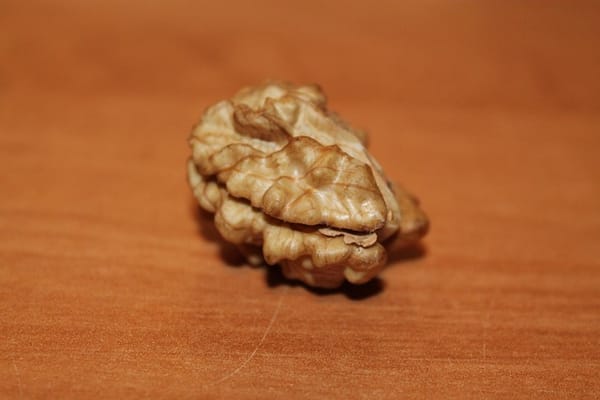
Neuroscientists often use the “triune brain” model (originally proposed by Paul MacLean).
While simplified, it provides a useful morphological picture:
| Region | Approximate Layer | Main Function | Gesture |
|---|---|---|---|
| Reptilian complex (brainstem + basal ganglia) | Deepest, oldest | Instinct, reflex, survival, territoriality, routine | Repetition and defense — the will bound to habit |
| Limbic system (“affective brain”) | Middle layer | Emotion, memory, bonding, pleasure/pain, empathy | Feeling and relationship — rhythm and response |
| Neocortex, especially frontal cortex | Outermost, newest | Reasoning, imagination, language, foresight, moral judgment | Reflection and projection — thinking and freedom |
In evolution, these layers were not literally stacked in time as separate organs, but they do express successive functional integrations: instinct → feeling → reflection.
From an anthroposophical perspective, these correspondences are striking:
| Anthroposophical System | Neurological Layer | Gesture |
|---|---|---|
| Metabolic–limb (will) | Reptilian brain | Earthly anchoring, instinctive reaction |
| Rhythmic (feeling) | Limbic or “affective” brain | Mediation between impulse and idea, emotional life |
| Nerve–sense (thinking) | Frontal and cortical brain | Light, overview, reflection, moral imagination |
Thus, the brain itself is a condensed image of the whole human being — the three systems folded into the head, one above the other, in reversed order:
the will below, the feeling within, the thinking above.
The frontal lobes, especially the prefrontal cortex, represent the most recent and distinctively human area.
They govern:
In a spiritual-scientific sense, this region is the organ of moral imagination, the physiological correlate of what Steiner called the conscious soul or spirit self in its first budding.
It is the part of the brain that can hold back reaction — the architectural counterpart of your earlier idea of the “bulging forehead”, the space where the human being withdraws from immediacy to become free.
Situated between the cortex and the brainstem, this area (including the amygdala, hippocampus, hypothalamus) integrates emotion, memory, and bodily rhythm.
It vibrates in sympathy with the heartbeat and breath.
This middle layer is the physiological echo of the rhythmic system — a bridge between instinct and thought, capable of both devotion and passion.
It is the seat of empathy when harmonized, and of anxiety or rage when overstimulated.
Its function is not only emotional but moral in potential, once illumined by the frontal cortex.
The deepest structures (medulla, pons, cerebellum, basal ganglia) regulate basic rhythms — heartbeat, breathing, posture, arousal.
They hold the memory of the species: survival patterns, territorial drives, repetition.
In anthroposophical terms, this region is akin to the metabolic-limb system within the head:
the shadow of will, still bound to necessity, yet indispensable for incarnation.
It carries the karmic weight of evolution, the animal past within the temple of the skull.
Steiner often indicated that the head is a metamorphosed body — a perfected form of the past, turned upside-down.
Thus, what we call “thinking” is actually a memory of willing from earlier cosmic stages, now transformed into pure image.
The three brain layers therefore reveal, in frozen form, the stages of world evolution — instinct (Old Saturn), feeling (Old Sun), and self-conscious thought (Old Moon and Earth).
In this sense, the brain is not the origin of consciousness, but its mirror — a sculpted memory of the spirit’s descent into matter.
| Layer | Physiological | Anthroposophical | Gospel / Archetype |
|---|---|---|---|
| Frontal cortex / neocortex | Thought, planning | Nerve–sense / Eagle | John |
| Limbic system | Feeling, rhythm | Rhythmic / Lion | Mark |
| Reptilian brain | Instinct, will | Metabolic–limb / Bull | Luke |
| Integrating “I” activity | Self-awareness | Angelic / Human “I” | Matthew |