The Spiritual Currency Of Forgiveness
Yesterday, I encountered a novel understanding of forgiveness, beginning with the word itself. For give ness. For-giving-ness, you could say. Forgiveness is something for giving
– 2 min read
Yesterday, I encountered a novel understanding of forgiveness, beginning with the word itself. For give ness. For-giving-ness, you could say. Forgiveness is something for giving
What is forgiveness, and how do we know when we’ve accomplished it? This is something I’ve struggled with for many years. If you forgive someone who has wronged you, does that mean you feel a sort of rosy glow inside when you think of that person, rather than thoughts of hurt, anger, or revenge?
Maybe forgiveness actually has nothing to do with your feelings or how you regard the offender, but is instead some kind of understanding beyond emotion. If so, what is it? How can we know whether we have truly forgiven someone or have simply changed our thoughts or feelings?
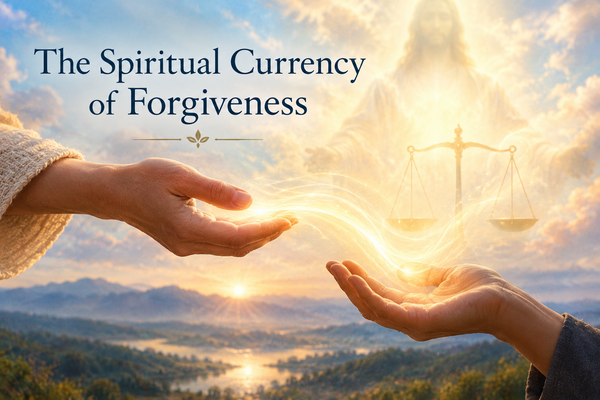
Yesterday, I encountered a novel understanding of forgiveness, beginning with the word itself. For give ness. For-giving-ness, you could say. Forgiveness is something for giving. Yes, you give forgiveness to someone who has harmed you, but what exactly do you give? A thought, a feeling, or something else? What if forgiveness is actually a kind of contract, like a credit you can create for others in the spiritual world? What if forgiveness is not simply an agreement but a spiritual being that brokers the karmic exchange?
Something like this idea was presented in a lecture called Life in the Afterlife by spiritual scientist and speaker Axel Burkart. Burkart said:
“When they say internally and spiritually, ‘I forgive,’ they are, so to speak, giving Christ what the other person would have to make up to me. I make it available. I say, ‘I waive it.’ We could almost say it is like an account, like money. ‘Please, dear Christ, give this to the other person. I waive my claim to it.’
“That is the deep meaning of forgiveness: that we say, ‘I give what should flow to me as compensation. I renounce it. I don’t need it. I place it in Christ’s hands and say, give it to another person who needs it more, needs it more urgently than I do.’
“It is a fascinating thought that it can work in a completely different way. And that is the true meaning of forgiveness. I waive the karmic compensation that the other person has to provide. Please let them give it to someone else, someone in need. I don’t need it anymore. Do you realize what kind of idea is behind this, how humanity can change if people forgive internally in this way, how compensation could potentially come about in a completely different manner?”
This truly is a revolutionary idea. If what Burkart suggests is true, the result could be the redemption of the entire human race through what we might call a debit payment. Violence, poverty, disease—all the ills of mankind—could potentially be wiped away through the simple act of forgiveness, if we were all to pass on our credit to someone else.
This would happen because the karmic debts that those of us who have wronged others would otherwise have to repay in the next life would already have been paid. There would be no need for the ills of life that help us work off our own debts to exist. The debt would already be settled.
I think it becomes clearer and clearer that we cannot save ourselves simply by installing another political party, overthrowing governments, or rioting. The same masters come to rule, no matter what we do. What if the secret to changing the world already exists, has been given to us by Christ, and is simply waiting for the moment when we recognize its worth and begin to employ it on a worldwide scale?