Texas: When the Land Begins to Breathe Again
The issue is not primarily a lack of resources. It is a loss of structure—of the conditions that allow life to organize itself.

– 3 min read
The issue is not primarily a lack of resources. It is a loss of structure—of the conditions that allow life to organize itself.
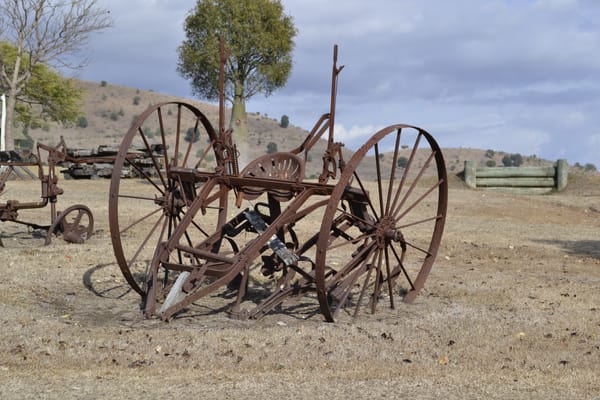
Taking on the land, which is exhausted, either by human over-use, or simply by neglect, can offer an amazing opportunity to practice perception, structure, and action in a way that is both grounded and transformative.
There are landscapes today that appear exhausted.
The soil is exposed, mineral, and hard.
Water does not enter—it runs off.
The sun does not nourish—it extracts.
In such places, the question is often framed in terms of inputs:
more irrigation, more fertilizer, more intervention.
But this framing already misses the essential point.
The issue is not primarily a lack of resources.
It is a loss of structure—of the conditions that allow life to organize itself.
Where structure is restored, life returns.
And where life returns, water follows.
A degraded landscape is not simply “dry.”
It is structurally simplified.
Three losses define it:
→ Sun hits the soil directly
→ Soil cannot retain water
→ Drought becomes self-reinforcing
Bare Soil → Heat Exposure → Moisture Loss
        ↓                      ↑
   Reduced Biology ← Compaction
        ↓
   Water Runoff
This loop is not broken by adding more water.
It is broken by reintroducing form.
The regenerative approach begins with a reversal:
Do not ask: How do we add water?
Ask: How do we allow water to remain?
Three principles guide this:
→ Water infiltrates instead of escaping
→ Soil becomes a living sponge
Regeneration is not achieved by isolated planting.
It is achieved by layered systems.
👉 It is this layer that:
This translate principles into form.
[Windbreak] ———— North Edge

| Zone 1 | Zone 2 | Zone 3 |

[Water Retention Spine — Swales + Pond]

| Zone 4 | Zone 5 | Zone 6 |

[Windbreak] ———— South Edge
→ Reduce wind + evaporation by up to 50%
→ captures and distributes water across the land
Clusters of:
Planted inside:
→ creates micro-climates
Between islands:
→ living soil carpet
→ temperature drop
→ perceptual stillness
This becomes:
Water Infiltration → Soil Life → Plant Growth
        ↑                          ↓
   Shade & Cooling ← Humus Formation
Beyond technique, a further dimension can be introduced.
In Sekem, desert was transformed not by force, but by:
SEKEM - THE MIRACLE IN THE DESERT: AN EXEMPLARY HOME FOR HUMANITY IN EGYPT
→ not additives, but formative gestures
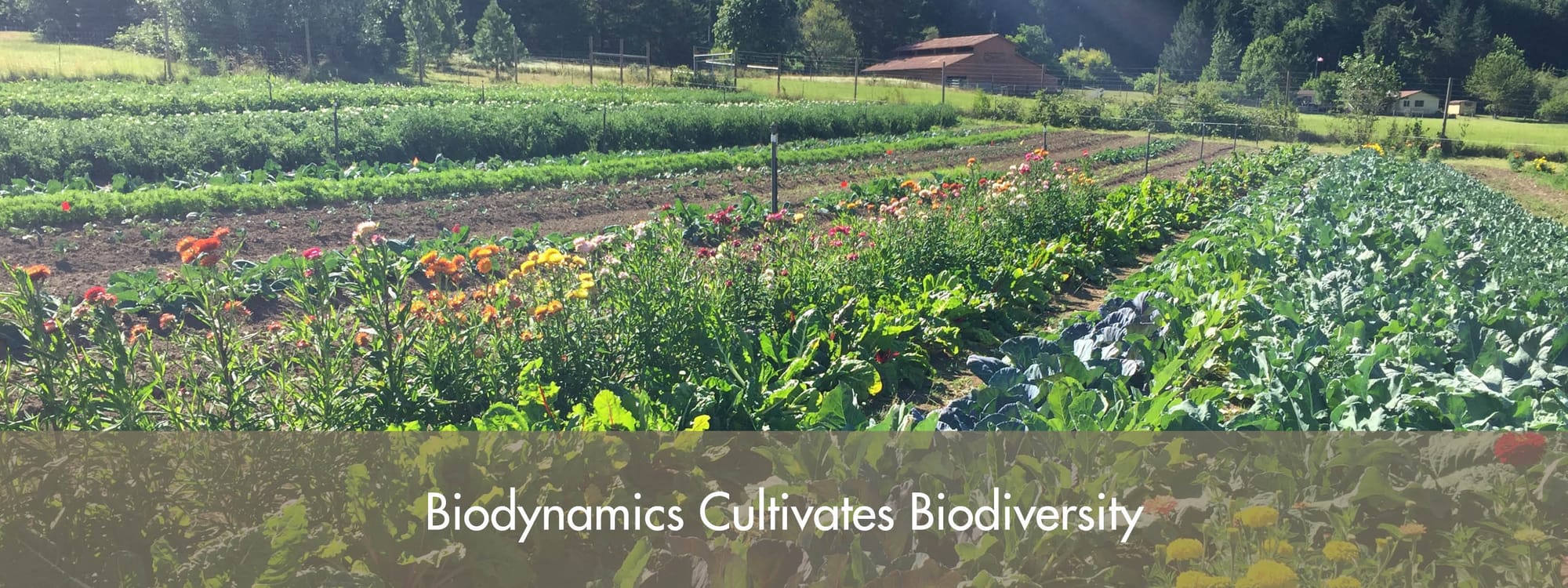
👉 The aim is not yield alone, but:
coherence of the land organism
Regeneration unfolds in phases:
A degraded landscape is not a final condition.
It is a state awaiting reorganization.
When water is slowed,
when soil is covered,
when life is invited back into structure—
something subtle begins to occur.
The land does not simply become productive again.
It becomes perceptible again.
Coolness returns.
Moisture gathers.
Silence deepens.
And one begins to sense:
That regeneration is not only ecological.
It is also cognitive.
A restoration of the conditions
in which the world can be met again.