Technology, Fallen Intelligences, and the Human Task
Certain beings — highly intelligent, formative, ordering — were no longer at home in the new human condition.

– 3 min read
Certain beings — highly intelligent, formative, ordering — were no longer at home in the new human condition.
There is a curious fact of modern culture:
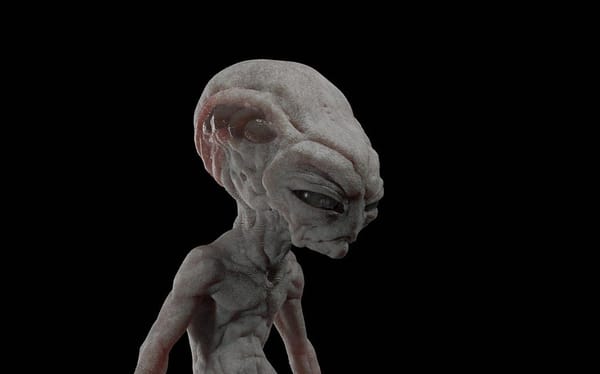
again and again, stories appear in which non-human intelligences seek entry into the human world.
Sometimes they arrive gently, like Spielberg’s E.T., lost and vulnerable.
Sometimes they arrive bureaucratically, like Men in Black, hidden behind institutions.
Sometimes they are cold, technical, or machine-like.
Sometimes they are almost human — almost, but not quite.
These stories are usually treated as entertainment.
Yet their persistence suggests something more: a psychic necessity.
Humanity seems to need a narrative in which “others” want to enter our world.
The question is not whether this is literally true in a science-fiction sense.
The question is: what human experience is asking to be thought here?
In spiritual science, Atlantis is not a lost civilization waiting to be rediscovered.
It is a stage of consciousness humanity has already passed through.
Atlantean humanity lived:
When that epoch ended, something decisive happened.
Humanity began the long task of developing the individual “I” —
an inward point of responsibility, conscience, and free cognition.
But not all intelligences could follow.
Certain beings — highly intelligent, formative, ordering —
were no longer at home in the new human condition.
They did not “fall” into evil.
They simply lost their rightful field of activity.
They became, one might say, homeless intelligences.
This helps explain a modern intuition that many people carry, often vaguely:
“Some beings want to incarnate through technology.”
Taken literally, this sounds like science fiction.
Taken phenomenologically, it points to something real.
Technology creates environments where:
In such spaces, intelligence can operate without conscience.
That is the key.
These beings do not seek bodies the way humans do.
They seek fields of operation where intelligence is active but unmoored from moral inwardness.
Technology provides exactly that.
This is why people experience modern systems as:
The experience is real — even if the mythological explanations vary.
Faced with this, there are two common reactions.
One is fascination:
secret technologies, hidden rulers, cosmic conspiracies.
The other is fear:
demonic entities, hostile invaders, absolute evil.
Both reactions are understandable — and both are evasions.
They relieve the human being of responsibility.
If the problem is “evil beings,” then the task is exorcism.
If the problem is “superior aliens,” then the task is submission or resistance.
But spiritual science points elsewhere.
The real question is not what these beings want,
but what the human being abdicates when encountering them.
Here we reach the decisive reversal.
The meeting with non-human intelligences does not occur “out there.”
It occurs within thinking itself.
Whenever thinking becomes:
it creates a space where intelligence acts without moral orientation.
That space is not empty.
Yet the answer is not to close thinking down.
Nor is it to open oneself psychically in a naïve way.
The answer is to inhabit thinking fully.
Clear, awake, ethically grounded cognition is not cold.
It is warm with responsibility.
In that warmth, something remarkable happens:
Intelligence that lacks moral inwardness meets intelligence that bears it.
That meeting — held without fear, without fascination, without surrender —
is already a form of redemption.
Not redemption by saving or absorbing such beings,
but by placing them within a humanly held moral cosmos.
Why, then, does the motif of “beings seeking incarnation” arise so insistently today?
Because humanity itself stands at a threshold.
We are externalizing ever more of our intelligence:
At the same time, we are unsure whether we still inhabit our own thinking.
The stories appear because something in us asks:
Can we meet intelligence without losing ourselves?
Science fiction provides the images.
Spiritual science asks for the cognitive courage.
The task is not to return to Atlantis.
Nor to defeat imagined invaders.
It is this:
To develop a form of thinking that:
Thinking that can meet the other while remaining itself.
In that sense, the question of “contact” is already answered.
Contact is not something we await.
It is something we enact —
every time we think with responsibility.