Morphology Series: 2. The Spine and the Staff of Consciousness
Every temple or cathedral secretly mirrors the human form.

– 3 min read
Every temple or cathedral secretly mirrors the human form.
When we behold the animal spine, we see a supple bridge suspended between head and tail, oscillating with the pulse of instinct. The animal moves as a wave through space — its spine a living rhythm of propulsion, every motion guided by the outer world. The whole being flows horizontally, drawn into movement by the play of desire and sensation.
In the human being, this gesture is turned upright.
The spine no longer follows the horizon but rises as a column, bearing the entire human form above the earth.
What was once a line of motion has become a line of support and orientation — an inner staff that allows consciousness to stand between heaven and gravity.
Through uprightness, the human being transforms motion into balance.
Every vertebra bears not only physical weight but also spiritual tension — the equilibrium between levity and heaviness, between the aspiration of thought and the pull of matter.
This tension is not a flaw; it is the very condition of awareness.
Each moment we stand or walk, the body must find the living midpoint between falling and rising — between being drawn into the earth and lifted toward the light.
In this sense, the spine is a moral organ.
It teaches us that stability is not rigidity but a perpetual renewal of balance, an act of presence repeated countless times each second.
The human posture is thus an exercise in freedom: the will no longer moved by impulse, but inwardly guided by consciousness.
Ancient myth speaks of the staff or rod carried by prophets, shepherds, and initiates.
This image is not accidental.
The human spine is itself that staff of the “I”, the inner sceptre through which the self learns to govern the organism.
At its upper end the brain forms a crown, at its base the pelvis a foundation — and between them flows the upright current of being.
In animals, the head follows the body.
In the human, the body follows the head — or rather, the head becomes a vessel of spirit that oversees the body through the spine’s mediation.
Here the vertical gesture reveals its true meaning: not domination, but order born of consciousness.
The spine is the mediator between knowing and doing, thought and deed.
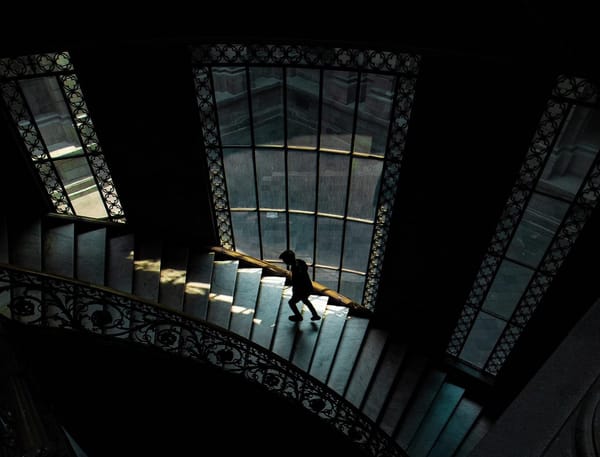
To stand upright is to confront gravity directly.
Every moment of standing is an act of resistance — yet not through defiance, but through integration.
The human being does not escape gravity; he learns to bear it consciously.
In this bearing, the physical world becomes transparent to moral experience.
When we bow, the spine softens; when we lie down, we relinquish control; but when we stand, we affirm:
I am here — between heaven and earth — and I can bear the weight of both.
Thus, the upright spine is a picture of grace incarnated in gravity.
It is the line through which the human being learns to meet the world without losing his center.
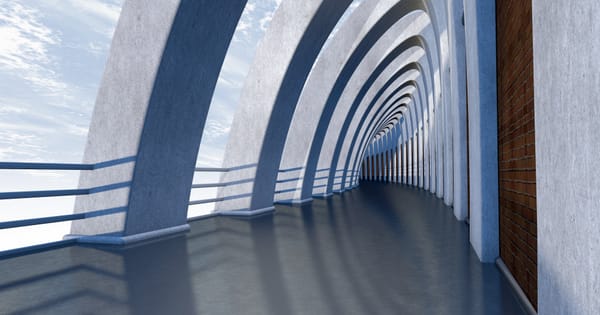
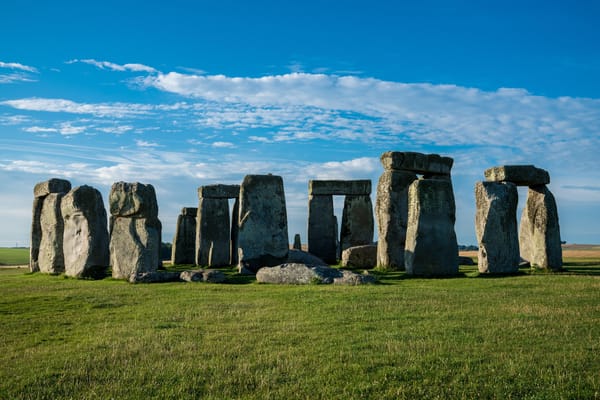
Every temple or cathedral secretly mirrors the human form.
The pillars are bones; the vaults, ribs; the central nave, the spinal column.
Within these architectural forms, humanity recognized its own archetype: a structure that unites strength and openness, form and resonance.
In the same way, our spine is a temple axis through which the divine may descend and the earthly may rise.
When we slouch, collapse, or distort this axis, the temple closes; when we stand upright in quiet dignity, it opens to the cosmos.
Steiner once hinted that upright posture is already a prayer — the body’s first articulation of reverence.
Stand quietly for a moment.
Sense the subtle sway of your spine — how it adjusts to keep you balanced.
Feel the downward pull of the earth and the upward lift through your crown.
Between them lives a silent rhythm: the equilibrium of heaven and earth through you.
In this stillness, the spine becomes a staff of awareness —
and consciousness, the art of standing upright within creation.