Kate and Meghan, two polarities on the world stage
When this union occurs, authenticity is no longer rebellion and protocol is no longer control—they become, together, the art of conscious incarnation.

– 2 min read
When this union occurs, authenticity is no longer rebellion and protocol is no longer control—they become, together, the art of conscious incarnation.
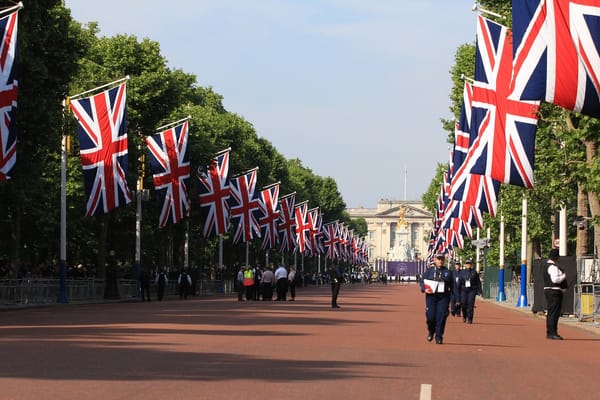
Through the polarity between Kate and William on one side, and Harry and Meghan on the other, an archetypal lesson for humanity is playing out before the world’s eyes.
Kate embodies the principle of formed consciousness: control, sacrifice, the willing alignment of personal life with a higher or collective rhythm. Her gestures are measured not because she is cold, but because she knows that true warmth requires boundaries; she bears the weight of continuity.
Meghan, by contrast, champions authentic expression. Her magnetism lies in spontaneity, in the feeling that she “just is.” Yet her form of authenticity is inseparable from self-promotion, from a will to be seen. The gesture turns outward, becoming commerce, brand, strategy—thus revealing the subtle egoism that often hides in the cult of “being oneself.”
Both poles belong to the same evolutionary stage.
The consciousness soul must first individuate—tearing itself free from inherited hierarchies—before it can freely re-enter lawful order.
Each without the other is incomplete. Without Kate’s formative restraint, authenticity collapses into theatricality. Without Meghan’s immediacy, form hardens into hollow protocol. Humanity’s task is to unite these into a higher synthesis: form that breathes and authenticity that serves.
Protocol, when rightly understood, is not oppression but an act of love toward complexity.
King Charles’s reverence for form and timing—the bow, the ritual, the attention to place—reveals that the world is not chaos to be improvised but a living organism to be harmonized.
Form becomes a vessel for mindfulness, a mirror of cosmic order. The I that can inhabit such form without losing freedom stands at the threshold of true creative sovereignty.
The modern cry for “authenticity” arose as a reaction against lifeless institutions. Yet when authenticity is pursued as feeling without formation, it becomes sentimentality or performance.
Princess Diana already embodied this paradox: the world loved her “spontaneity,” but the deeper royal task—to hold an image of continuity—was broken in her. What felt liberating to the public was, on a spiritual level, a loosening of the lawful gesture that once connected monarchy to the etheric life of the nation.
The next step for humanity is not to choose sides but to awaken a new gesture where freedom and law meet.
This higher “I” does not express itself against form nor dissolve itself within it—it creates form.
It is the I that can sacrifice spontaneity without losing love, that can serve the whole without becoming mechanical.
Such an I acts out of the living awareness of timing, proportion, and relationship: the same awareness that in art makes beauty, and in ethics makes conscience.
In this light, the Royal Family becomes less a relic than a living tableau of humanity’s inner schooling. Each figure dramatizes an aspect of our collective becoming. Through them we are invited to ask:
When this union occurs, authenticity is no longer rebellion and protocol is no longer control—they become, together, the art of conscious incarnation.