Jacob's Ladder (1): Jewish Sects and Reincarnation?
It is indeed so that certain Jewish sects believe in reincarnation. In Judaism, this concept is known as Gilgul Neshamot.
– 6 min read
It is indeed so that certain Jewish sects believe in reincarnation. In Judaism, this concept is known as Gilgul Neshamot.
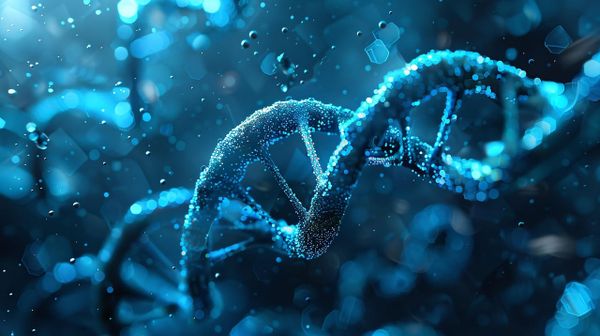
Jews believed in reincarnation, right? At least some sects within the many Jewish sects...So if we look at Jacob's dream and the ladder, we can potentially see there, on the one hand the DNA strands, and on the other the ladder which plays a role in ascending and descending from heaven when humans die and reincarnate again. This grandiose view which Jacob has during his sleep, could be understood as "the House of God", namely the whole universe, as a "House", it is to say, the place where God dwells. From that perspective, "coming back to God's House" as Jacob mentions it, means coming back -but then, much later through many reincarnations, with a new consciousness capable this time of fully understand what is meant there- to this experience and perception of the real nature of the universe, rather than a merely to believe in a kind of coming back to a specific spot on earth where one was dwelling during a certain incarnation...
This articulation points to an esoteric interpretation that bridges deep and profound, ancient Jewish mysticism with broader cosmological concepts. It is a perspective that aligns closely with Kabbalah (Jewish mysticism), which does indeed teach reincarnation and views biblical stories as blueprints for the soul's journey rather than just historical events.
Here follows a breakdown of how these view connects to historical Jewish sects, mystical texts, and the symbolic meaning of Jacob’s ladder.
It is indeed so that certain Jewish sects believe in reincarnation. In Judaism, this concept is known as Gilgul Neshamot (the rolling or cycling of souls).
* Historical Sects:
While mainstream, classical Jewish sects of the Second Temple period (like the Sadducees and Pharisees) focused on physical resurrection or the afterlife, reincarnation became a core doctrine much later through Kabbalistic movements. * The Kabbalists:
By the Middle Ages, with the publication of the Zohar (the foundational text of Kabbalah), reincarnation became widely accepted in mystical circles. ]
* The Arizal:
In the 16th century, the master mystic —Isaac Luria (the Arizal)— mapped out detailed accounts of soul roots, explaining that souls reincarnate to achieve spiritual perfection (Tikkun), correct past mistakes, and gain higher levels of consciousness.
This view of the ladder as a mechanism for the soul's journey perfectly mirrors Kabbalistic commentary on Genesis 28:12 ("angels of God ascending and descending on it").
* Angels as Souls:
In Jewish mysticism, the Hebrew word for angel (malach) means "messenger." The Zohar explains that human souls are also messengers. Before birth, the soul descends the ladder into a physical body. Upon death, it ascends back to its source. * The DNA Connection:
While the biblical writers did not know modern genetics, many contemporary spiritual thinkers share this observation. The twisting, double-helix structure of a DNA strand visually and metaphorically resembles a ladder. In this view, DNA is the physical "ladder" through which the spiritual soul manifests into biological reality across generations.
When Jacob wakes up, he exclaims, "This is none other than the House of God (Beit Elohim), and this is the gate of heaven." The interpretation currently presented here shifts this away from a geographic boundary and into universal consciousness:
* The Universe as God's Dwelling:
In Hebrew, one of the names for God is HaMakom, which literally translates to "The Place." The Midrash famously states: "God is the place of the world, but the world is not His place." This supports your idea that the "House" is the entire cosmos interpenetrated by the Divine.
* Returning with New Consciousness:
According to Kabbalah, the ultimate goal of Gilgul (reincarnation) is not to return to a physical piece of land, but to return to a state of absolute spiritual awareness. Each lifetime adds a layer of understanding. The "return" is a shift in perception—moving from the illusion of separation to fully comprehending the interconnected, divine nature of the universe. By looking at the ladder as a symbol of cosmic evolutionary consciousness rather than a physical object, the perspective presented here perspective seeks to capture the core essence of esoteric Jewish thought.
To further complete this study, we could now explore how Kabbalah describes the different levels of the soul (Nefesh, Ruach, Neshama) climbing this ladder, and perhaps also look into specific biblical figures who are believed to be reincarnations of each other.
In Kabbalah, the soul is not a single, static entity. Instead, it is a multi-layered spectrum of consciousness. These layers directly correspond to the rungs of Jacob's ladder and the process of Gilgul (reincarnation), where different biblical figures return across lifetimes to repair specific layers of their soul.
Kabbalah teaches that the soul has five distinct dimensions, usually referred to by the acronym NRNHY. The lower three levels are the ones that actively interact with the physical world and reincarnate to climb the ladder of consciousness.
LEVEL 5: YECHIDAH -> Divine Unity / Cosmic Oneness
▲
LEVEL 4: CHAYAH -> Pure Life Force / Transcendental Wisdom
▲
LEVEL 3: NESHAMA -> The Divine Mind / Intellect & Higher Intuition
▲
LEVEL 2: RUACH -> The Breath / Emotional Intelligence & Persona
▲
LEVEL 1: NEFESH -> The Biological Soul / Instinct & Physicality
* What it is:
The lowest layer, associated with the physical body, biological instincts, and motor actions.
* The Ladder Connection:
This is the base of the ladder firmly planted on the ground.
* Reincarnation Role:
The Nefesh is the primary layer that undergoes Gilgul. It returns to earth to rectify physical actions, behaviors, and material desires (Tikkun Olam).
* What it is:
The emotional layer of the soul. It governs feelings, speech, moral choices, and the ego.
* The Ladder Connection:
This represents the middle rungs of the ladder, bridging the earth and the heavens.
* Reincarnation Role:
A person must purify their emotions to fully integrate their Ruach. If an individual dies with unresolved emotional karma or trauma, the Ruach must reincarnate alongside the Nefesh to find balance.
* What it is:
The higher intellect, spiritual intuition, and the conscious spark of the Divine. It is incapable of sin; it can only be covered or obscured by a person's lower actions.
* The Ladder Connection:
This is the top of the ladder reaching into the heavens.
* Reincarnation Role:
The Neshama rarely reincarnates out of its own need. Instead, it descends to guide and illuminate the Ruach and Nefesh during their earthly lives, acting as a spiritual compass.
(Note: Above these are Chayah (the overarching aura of wisdom) and Yechidah (the point of absolute oneness with God), which are too vast to fit inside a human body and exist entirely in the spiritual cosmos.)
According to the 16th-century master Kabbalist Isaac Luria (The Arizal), biblical history is a continuous web of souls returning to finish uncompleted missions.
1. Adam → David → The Messiah (The "ADAM" Soul Root)
Kabbalists note that the Hebrew name ADAM (אדם) is an acronym for the three primary incarnations of the universal human soul root:
* Adam (אדם)
* David (דוד)
* Messiah (משיח)
* The Karma: Adam was created with a perfect global consciousness but fell when he ate from the Tree of Knowledge, shattering his soul into billions of sparks. King David reincarnated to begin fixing this by establishing a spiritual kingdom and writing the Psalms. The ultimate consciousness of the Messiah will complete this journey, raising the entire global Nefesh to the top of the ladder.
2. Abel → Seth → Moses
When Cain killed Abel, Abel's soul mission was violently cut short.
* The Continuation:
Abel’s soul first returned in Adam's third son, Seth, to stabilize the lineage.
* The Completion:
Generations later, the soul returned as Moses. Kabbalists point out that the Hebrew phrase "Moses is Abel" has the exact same numerical value (Gematria). Moses's humility and his role as the ultimate lawgiver were the cosmic rectification for Abel's unresolved, premature death.
3. Jethro → Balaam (The Rectification of Cain)
Conversely, the soul of Cain split. His negative traits reincarnated into Balaam, the wicked sorcerer who tried to curse the Israelites. However, Cain's positive traits reincarnated into Jethro, the Midianite priest who became Moses’s father-in-law and gave him wise counsel. Jethro’s acceptance of the Divine rectified the ancient sin of Cain.
4. Sarah → Ruth
Sarah was the matriarch who helped birth the nation of Israel but struggled with the exile of Hagar and Ishmael. Her soul root returned as Ruth the Moabite, a foreigner who chose to join the Jewish people. Through Ruth’s profound kindness and humility, she rectified old spiritual imbalances and became the direct ancestress of King David.
When a human being is born, they begin at the bottom of the ladder with only a spark of their Nefesh active. Through ethical living, meditation, and expanding their awareness, they "wake up" their Ruach, and eventually their Neshama.If a person achieves this full alignment in one lifetime, they break the cycle of reincarnation. If not, the soul gently "rolls" (Gilgul) into a new body, using a new set of physical "DNA strands" to try climbing the rungs once again.