Global Disruption
So a blocked Hormuz does not automatically mean “the global economy stops.” It means a scramble to substitute, conserve, re-route, and absorb much higher costs.

– 7 min read
So a blocked Hormuz does not automatically mean “the global economy stops.” It means a scramble to substitute, conserve, re-route, and absorb much higher costs.
Here is a grounded map or outline of the situation as of Sunday, March 22, 2026.
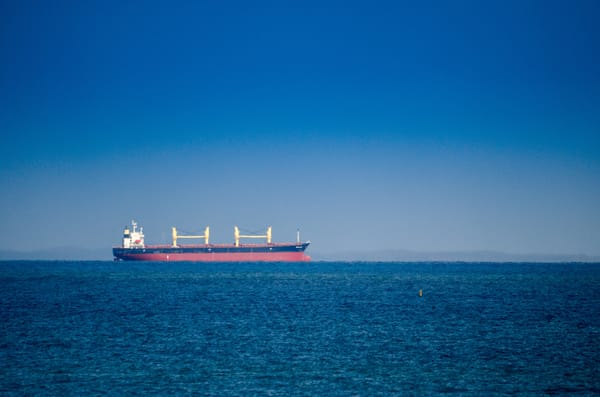
The war is real, the Strait is severely disrupted, and the economic stakes are enormous. Reuters and AP describe the Strait as effectively closed or heavily choked by Iranian attacks, with shipping insurers pulling back, oil prices at multi-year highs, and Washington threatening further escalation if passage is not restored. The choke-point carries about 20 million barrels per day and roughly 19% of global LNG trade, with most flows headed to Asia.
The probability ranges below are judgment calls, not certainties. They are based on the current military facts, the political signals from Washington and Tehran, and the still-limited appetite among Europe, Russia, and China for direct entry into the war. Reuters reports Britain is distancing itself from Trump’s ultimatums, Germany says it has no plans to send extra forces, and Reuters has also reported that Russia and China have largely stood aside militarily so far.
Estimated likelihood: 30–40%
The U.S. and Israel continue heavy air and missile strikes, Iran keeps up selective attacks on shipping and Gulf infrastructure, oil stays high, but both sides stop short of the single move that would force total escalation: a U.S. ground invasion or a sustained campaign to collapse the Iranian state. This is plausible because the U.S. is threatening more infrastructure attacks, but European allies are visibly reluctant to widen the war, and Iran is signaling that passage is still available to non-“enemy-linked” ships rather than announcing an indiscriminate permanent closure.
In this scenario, Hormuz remains dangerous rather than neatly reopened. Shipping resumes only partially, insurance stays expensive, and the war settles into a brutal bargaining phase. Reuters has already reported stranded or damaged tankers, suspended shipments, and the U.S. Navy declining routine escort requests.
Estimated likelihood: 25–35%
This is the “bad but not maximal” path: weeks or months of missile, drone, naval, cyber, and infrastructure attacks across Iran, Israel, Iraq, the Gulf, and shipping lanes. That looks increasingly plausible because Reuters says U.S. objectives have not changed, thousands of targets have already been hit inside Iran, and Gulf airspace and infrastructure have repeatedly been affected.
This scenario does not require ground troops. It is sustained by stand-off weapons, naval pressure, sabotage, and economic exhaustion. It is probably the most structurally stable war path because it allows each side to claim resolve without taking the riskiest step.
Estimated likelihood: 15–25%
This would mean not a full invasion of Iran, but a narrower operation: mine-clearing, seizure or destruction of Iranian naval assets, strikes on coastal launch sites, and possibly temporary occupations of small maritime positions to reopen shipping lanes. Reuters has already described U.S. attacks on Iranian mine-laying vessels and a debate over restoring safe passage.
This is more plausible than a full land war because it directly addresses the chokepoint problem. But it is still dangerous: it would increase the chance of Iranian retaliation against Gulf energy, desalination, ports, or U.S. bases, and could still fail to produce safe commercial transit if insurers and shipowners remain unconvinced.
Estimated likelihood: 5–10%
A true invasion of Iran remains the least likely of the serious options. Not because it is impossible, but because it would be vastly larger, costlier, and politically riskier than the other choices. Current reporting shows domestic opposition in the U.S., war-powers conflict in Congress, and allied reluctance abroad. Reuters reported 59% of Americans oppose the strikes, and AP/Reuters have covered efforts in Congress to restrain or debate the campaign.
The key point is that “ground troops” is not one thing. Small deployments to protect bases or support maritime operations are much more plausible than a half-million-man occupation force. The latter would represent a qualitatively different war.
Estimated likelihood: 10–15%
This is not yet a clean “World War” scenario, but a broader systems conflict: Russia giving intelligence or materiel help, China backing Iran diplomatically and economically while avoiding combat, Europe protecting selected assets without fully joining the war, and more clashes in the UN and global markets. Reuters has already reported U.S. and allies clashing with Russia and China at the UN, while also reporting that Russia and China have so far stood aside militarily.
The probability rises sharply if any of these happen: large U.S. ground deployment, mass casualties on allied territory, attacks on nuclear sites with radiological consequences, or repeated strikes on European or Asian shipping that force outside navies to intervene.
Near-term probability: low, roughly 5% or less.
The U.S. does have the Selective Service system in place, and official Selective Service material explains how a draft lottery would work if activated. But the same official sources make clear that registration is not the same as an active draft, and the agency is in an “active standby” posture rather than conducting inductions. Reuters’ earlier fact-check also noted that automation of registration does not itself activate conscription.
For a real draft to become likely, the war would have to move beyond air, naval, cyber, and proxy operations into a manpower-hungry land campaign or multiple simultaneous theaters. That is not where the war appears to be right now. So the better way to think about this is: a draft is a second-order risk tied mainly to Scenario D, not to the current level of fighting.
As for the fear of domestic rupture: a draft would likely trigger severe political backlash and legal conflict, especially given current public opposition, but “automatic civil war” is still too strong a conclusion from the present evidence.
A full world war remains a minority outcome, but the risk is real enough to take seriously: roughly 10–20% from here.
Why not higher? Because the main outside powers still appear to want influence without direct entanglement. Britain is publicly distancing itself from Trump’s line, Germany has no plan to send major extra forces, Europe is split, and Reuters says Russia and China have stood aside militarily even while opposing the war politically.
Why not lower? Because this war sits on top of global energy arteries, allied bases, nuclear anxieties, and already-existing Russia-West tensions. Miscalculation risk is high. Once attacks spread to more countries’ shipping, bases, or critical infrastructure, governments can get dragged in even when they do not want a general war.
The first-order effect is an energy shock. The Strait handles roughly 20 mb/d of oil and a very large share of LNG, especially from Qatar and the UAE. Even with some bypass pipeline capacity, the IEA says only about 3.5 to 5.5 mb/d can be redirected around the Strait, which is far from enough to fully replace normal flows.
The second-order effect is inflation plus slower growth. Reuters reported the IMF saying every sustained 10% increase in oil prices adds about 0.4 percentage point to inflation and lowers growth. That means a prolonged Hormuz blockade is not just a fuel story; it feeds into transport, food, chemicals, power, manufacturing, and consumer prices.
The third-order effect is Asia gets hit first and hardest. The IEA says about 80% of the oil moving through Hormuz is destined for Asia. Japan, India, South Korea, and China therefore face the sharpest immediate supply and price stress, with LNG disruption adding pressure to electricity and industrial systems.
The fourth-order effect is financial stress, not just higher gasoline. Reuters has already reported suspended shipments, canceled war-risk coverage, tankers stranded, and fears of a wider market shock if escalation continues. That means higher shipping costs, tighter credit for commodity traders, lower airline margins, weaker consumer sentiment, and renewed central-bank dilemmas.
The fifth-order effect is re-routing and rationing rather than instant collapse. Saudi Red Sea export routes and other workarounds help, and Reuters has reported higher loadings from Yanbu as flows get diverted. So a blocked Hormuz does not automatically mean “the global economy stops.” It means a scramble to substitute, conserve, re-route, and absorb much higher costs.
The most likely near-term path is not a U.S. draft and not immediate world war. It is a prolonged regional attrition war with intermittent coercive bargaining, very high energy prices, damaged shipping confidence, and persistent danger of a larger break-out.
The most important trigger to watch is this: does Washington decide that reopening Hormuz requires more than strikes and naval pressure? If yes, the odds of both a draft discussion and a broader war rise fast. If no, the war is more likely to remain regionally concentrated but economically global.
What is at play here, are dynamics, for sure with real and dramatic consequences, yet where what pays out, still corresponds to a higher, greater good: humanity, through all of its conflicts and difficulties, learns and develops, in skills, abilities, knowledge, expertise, and consciousness. Many lessons are being learned, through this grand spectacle, which certainly involves human live. But humanity needs to not only learn to live, properly and "decently", but needs to learn to die, it is to say, to learn to see that "death" is only another side of life, one which plays into reality much more than it seems. And seeing this correctly, could mean re-ordering, re-structuring, and re-organizing society and the economy in a much more appropriate way.

ReutersIran says Hormuz open to all but 'enemy-linked' ships2 days agoReutersTrump, Iran threaten power, energy targets as war escalates2 days ago