Frontal Cortex and Human Development
Many who fall into social paralysis or chronic poverty are not “lazy”, but neurologically and spiritually untrained in these frontal capacities.

– 2 min read
Many who fall into social paralysis or chronic poverty are not “lazy”, but neurologically and spiritually untrained in these frontal capacities.
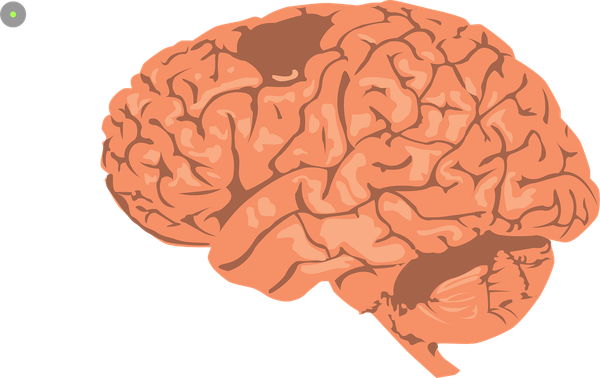
In The Representative of Humanity, Steiner points repeatedly to the forehead as the seat of freedom:
the place where the human being learns to bear the Spirit consciously, not instinctively.
The “bulging forehead” of the future is not only an anatomical metaphor; it’s the image of the I learning to shape the world through insight, foresight, and moral imagination.
The frontal cortex — the neurological correlate of this region — governs:
In anthroposophical terms: it’s the region where thinking becomes will, where the I organizes time.
Modern society suffers from the exact opposite:
Many who fall into social paralysis or chronic poverty are not “lazy”, but neurologically and spiritually untrained in these frontal capacities.
They lack rhythm, continuity, and the inner gesture of foresight — all functions of the incarnated I in the frontal field.
In a culture of consumption, the cortex becomes undernourished: dopamine replaces deliberation.
The proposed Houses of Renewal could consciously model themselves on the physiological architecture of the head:
| Physiological organ | Social function | Pedagogical form |
|---|---|---|
| Frontal cortex | Vision, planning, moral reasoning | Goal setting, project incubation, reflective practice |
| Parietal / temporal zones | Perception, integration of experience | Artistic work, dialogue, biography |
| Cerebellum & limbs | Execution, rhythm, skill | Craft, agriculture, enterprise |
Each participant learns to balance these in daily rhythm:
This would incorporating simple but potent cognitive-eurythmic practices:
Over time, participants experience a subtle transformation: thinking gains density; will gains light.
That is the etheric correlate of the forehead becoming luminous.
The very design of the houses can support this:
The building itself mirrors the human form — an incarnated pedagogical gesture.
The incubator thus becomes more than a social project; it’s a microcosm of human evolution.
In earlier epochs, the will worked through the limbs; in ours, it seeks entry into the forehead.
That is why social renewal must include training in responsibility, temporal order, and envisioning — the cortical virtues of freedom.
The “bulging forehead” of future humanity is the image of a being who can consciously remember to love.
The focus on this part of the brain and its functions will be gathered under a new section titled:
The Forehead of the Future:
Social Renewal and the Training of the Frontal Cortex
Why the incubators of tomorrow must educate not only the heart, but also the organ of moral foresight.
It will link a new social vision with Steiner’s deeper anthropology — bridging neuroscience, economics, and initiation.