From Inner Discipline to Autonomous Systems
The smallness of a territory does not restrict—it intensifies.

– 4 min read
The smallness of a territory does not restrict—it intensifies.
It is important to see these historic facts surrounding Dutch capital, the creation of the Bank of England, etc, not in a moralizing way.
Yet it is interesting indeed to see how the Dutch neatness and industriousness—in part due to the configuration of their relatively small country—is still embedded in soul-functionality, while it later in England externalizes in institutional and economic functionality and effectiveness, where it starts loosing the original inner orientation. Now this process or "transfer" from the Netherlands to Britain goes one step further when the system goes overseas to America.
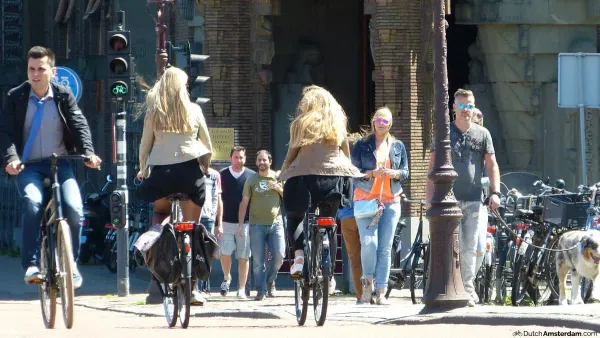
While what was embedded—and still is—in the Dutch soul, no longer follows capital accumulation as it existed in the Dutch context when capital savings were transferred to England around 1694. This whole attitude speaks still very particularly within the Dutch people to this day. There is this example of Mark Rutte, the former Dutch Prime Minister, for instance passing the baton to the next person, then going out of the building where his bike awaits, since he always goes to work by bike. A very powerful and typical Dutch "picture" indeed. Also remarkable how the Dutch relate to each other through for instance their "gezelligheid". And as an illustration: taking the train between a Belgian and Dutch city, one can see in the landscape the difference down to a meter between these two countries when crossing the border between them.
There are moments in history where one can observe not merely events, but transformations of where human forces reside.
Not what changes—but where it lives.
A gesture once carried inwardly becomes external.
A question once held in the soul becomes a system in the world.
The development of modern capitalism may be read in this way—not as a moral decline, nor as progress—but as a migration of inner forces into external structures.


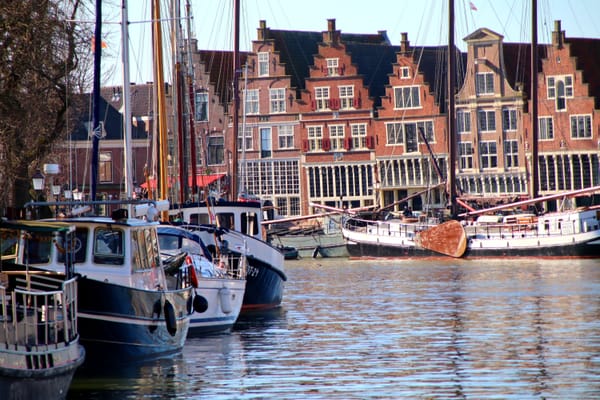
In the Dutch Republic, one encounters a rare coherence:
This is not merely geography or economics.
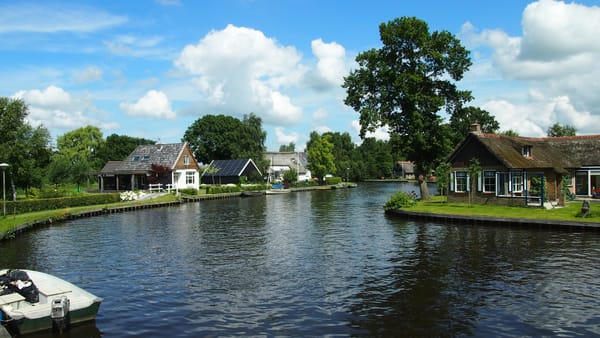
It is soul becoming landscape.
The smallness of the territory does not restrict—it intensifies.
Everything must be ordered, maintained, negotiated.
And so:
Even today, this persists in subtle forms:
Not theatrical power, but functional continuity.
And between people:
A word difficult to translate, because it names a shared field:
Here, economy is still embedded within life.
Wealth circulates within a moral atmosphere
It does not yet define it
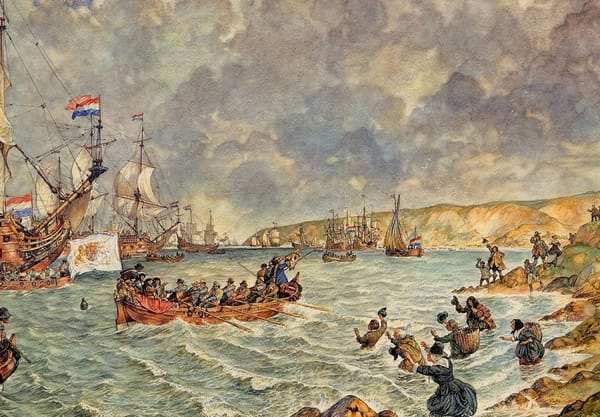
When William III of England crosses into England during the Glorious Revolution, something subtle occurs.
Not a conquest.
Not a replacement.
But a translation.
What moves is not merely people or capital, but:
The founding of the Bank of England does not represent a copy of Dutch life.
It represents something else:
The abstraction of Dutch reliability into institutional form
Trust is no longer:
It becomes:
In England, the same forces take on a new character:
But now:
These are no longer primarily inner qualities
They are system requirements
Finance links with the state.
Debt becomes permanent.
Markets deepen.
The question is no longer:
How shall I live?
But:
How shall the system operate?
The center has shifted.
If the Dutch hold the inner form,
and England builds the institutional form,
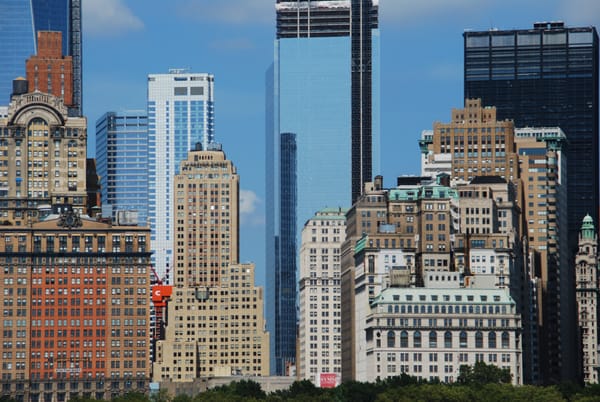
then America becomes the domain of pure system dynamics.
Here, the process completes a further step:
The earlier moral residues become faint.
What remains is:
Capital is no longer:
It becomes:
a self-moving field
Your observation of the border between Belgium and the Netherlands is not anecdotal.
It is diagnostic.
To the meter:
This is not policy alone.
It is:
a difference in how the human being inhabits form
One side:
The other:
These are not judgments, but configurations of consciousness.
We can now trace the movement clearly:
Dutch Phase — Soul-Embedded Economy
Inner discipline shapes outer life
Economy remains within culture
English Phase — Institutional Economy
Inner discipline becomes system
Economy becomes structure
American Phase — Autonomous Economy
Structure becomes self-moving
Economy becomes environment
At each step, something moves outward:
Until:
The system continues
even when the originating inner impulse is no longer consciously present
It would be too simple to call this a loss.
Without this movement:
And yet:
What is gained in scale
is often lost in inward reference
The question is therefore not:
But:
how to reintroduce inner orientation within external systems
A man leaves office.
No spectacle.
No rupture.
A bicycle waits outside.
This image still carries something of an earlier phase:
It is not nostalgia.
It is a reminder:
That systems once had a center
And that this center lived in the human being
Modern society may be understood as a vast field of systems
that continue to operate with increasing precision.
But precision alone does not orient.
And so the task emerges again, in a new form:
Not to dismantle systems,
but to rediscover the inner forces
that once gave them direction.